Sports massage vs deep tissueWhat’s actually different, and why you don’t have to pick one.
One is built around your training, the other around depth. Here’s how they compare on purpose, pressure and timing, what the research shows, and how to book the right session.

Nicole Fry, LMT · Rocking Calm Body Therapy
Updated · 8 min read
What’s the difference between sports massage and deep tissue?
The short answer on sports massage vs deep tissue: sports massage is built around your training and the muscles it works hardest, while deep tissue massage is built around depth, using slower, more forceful strokes on the deeper layers of muscle and connective tissue.1,2
In practice they overlap more than a menu suggests. Cleveland Clinic describes sports massage as similar to deep tissue massage,1 while Mayo Clinic Press compares it to Swedish massage.2 When two major medical sources put the same massage next to two different styles, you can tell the labels are loose.
What matters more than the name is the plan: what you’re training for, where you’re tight, how much pressure you like and when your next big effort is.
What is sports massage?
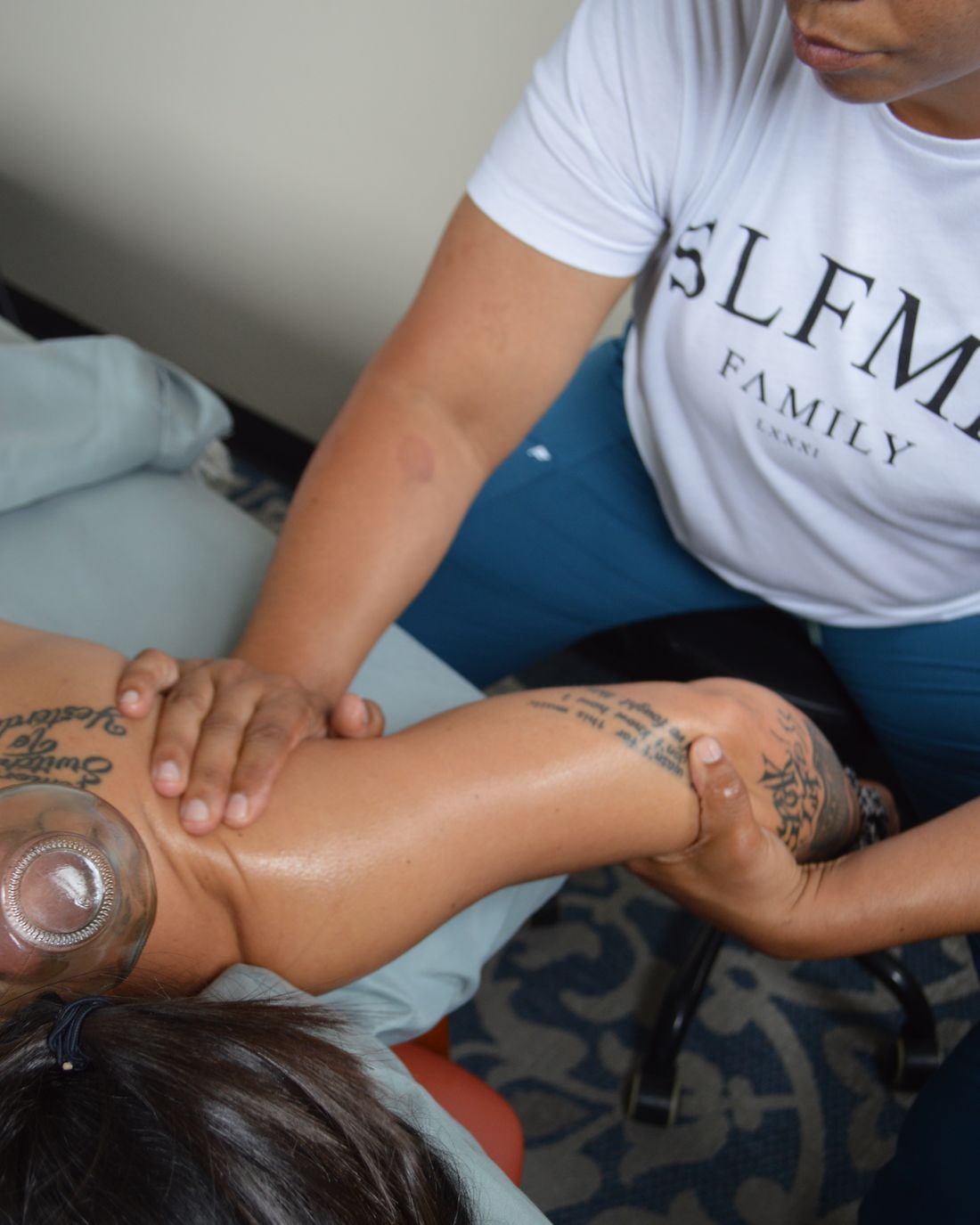
Sports massage is massage organized around physical activity. It focuses on the muscles that take the most load in your sport or in any repetitive physical activity,1 whether that’s running, lifting, surfing or a job that keeps you on your feet.
What makes it “sports” is timing. Event-day work is quick and light, built on compressions, gliding strokes and broad cross-fiber friction, while deeper, more detailed work is saved for the off-season and training blocks.3 Some therapists add stretching, though whether it belongs right before competition is still debated.3
At Rocking Calm, assisted stretching is part of any session when it’ll help, at no extra charge. The sports massage page covers what a training-focused session looks like here.
What is deep tissue massage?
Deep tissue massage is defined by depth, not by a sport. It uses slower, more forceful strokes to target the deeper layers of muscle and connective tissue.2 Cleveland Clinic describes it as a good fit for general muscle tightness and chronic muscle pain, including the tightness that builds from sitting, driving or hunching over a laptop.1
Deep doesn’t have to mean painful. A tender spot can feel uncomfortable while it’s worked, but you shouldn’t feel severe pain, and some soreness the next day is possible.6 One research review’s preferred definition of deep tissue massage even includes working within the client’s comfort.5
In a Rocking Calm session, Nicole may use deep tissue, trigger point, myofascial and Swedish techniques, depending on what she finds. The deep tissue massage page has more on how that feels.
Sports massage vs deep tissue, side by side
Read these rows as tendencies, not rules. The labels overlap, and a good session borrows from both.
| What differs | Sports massage | Deep tissue massage |
|---|---|---|
| Purpose | Built around a sport or repetitive activity1 | Reaching the deeper layers of muscle and connective tissue2 |
| Techniques | Compressions, gliding strokes, cross-fiber friction and kneading, sometimes stretching3 | Slower, more forceful strokes2 |
| Pressure | Light and brisk on event day, deeper during training3 | Firm, but never to the point of severe pain6 |
| Timing | Event day (short), training blocks and recovery weeks3 | Training or recovery days, not right before a big effort3,6 |
| Who it suits | Anyone who trains or does repetitive physical work1 | General tightness or chronic muscle pain, if you like firm pressure1 |
| Afterward | Event-day work aims to leave you loose but alert3 | Some soreness the next day is possible6 |
| Research | No proven performance boost; may slightly help flexibility and soreness4 | No agreed definition; studies too varied for clear conclusions5 |
Sports and deep tissue, one session90 minutes, $190. Sports work and deep pressure, plus cupping, scraping, hot stones and stretching at no extra charge.
Should you get a sports massage before or after an event?
Either can fit, but they’re different sessions.
On event day
Pre-event sports massage usually happens 10 to 60 minutes before the start and lasts from a few minutes to about 15. It sticks to quicker, lighter strokes, and the American Massage Therapy Association’s journal puts it bluntly: no deep tissue work right before competing.3 It’s popular with athletes and trainers, but research showing it works is scarce.3
In the days before a big effort
Since event-day work happens minutes before the start, the real question for a table session is how many days out to book. Deeper pressure can leave you sore the next day,6 so give deep work a few days of buffer and keep race week lighter.
After the event
Go lighter first. You’re already sore, and deeper pressure can add its own next-day soreness,6 so save deep work until the race soreness eases. A full recovery session with stretching fits well once you’re walking normally again.
During a training block
This is where the two blend best. Away from race day, deeper work on the muscles you load most is fair game,3 and a regular rhythm fits around your schedule. For a realistic schedule, see how often you should get a massage.
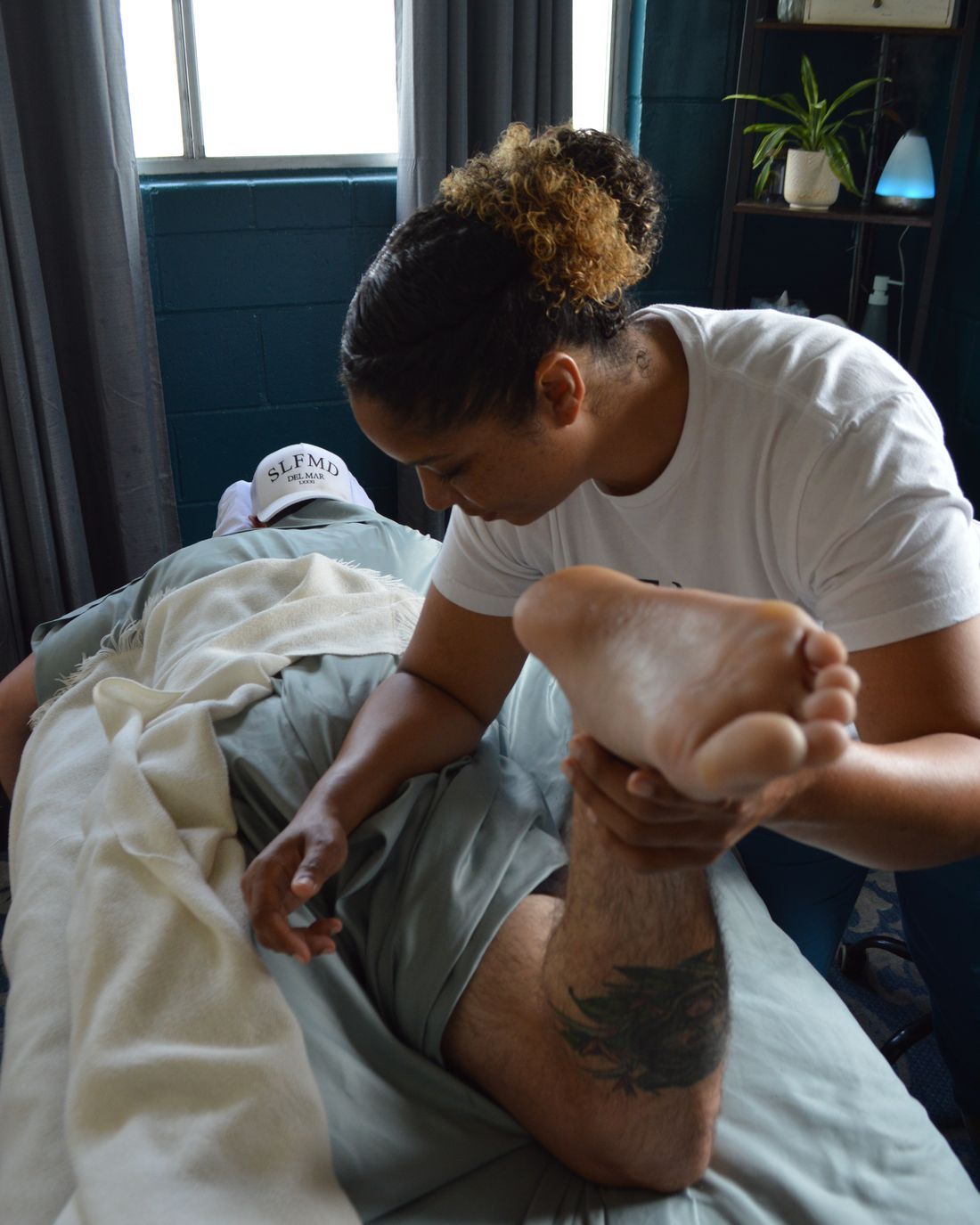
Is sports massage or deep tissue better for recovery?
Neither label has strong research behind it, so be wary of big promises.4,5
Sports massage research
A 2020 systematic review and meta-analysis found no evidence that sports massage improves strength, jump, sprint, endurance or fatigue. It did find small improvements in flexibility and in delayed onset muscle soreness, the achy stiffness that shows up after hard or unfamiliar exercise.4 The authors noted that the studies were small and varied widely in design.4
Deep tissue research
This is murkier still. A 2018 review found no commonly accepted definition of deep tissue massage in the research, and studies use such different techniques that clear conclusions are hard to draw. It found favorable outcomes may be possible for people with pain or limited range of motion, and it noted rare serious side effects, probably from forceful pressure.5
The honest take
Choose based on how you want to feel and when your next big effort is, not on the label. Deeper isn’t automatically better, and more pressure doesn’t mean more progress.
Who should get sports massage, and who should get deep tissue?
Sports massage tends to suit you if you’re training for something: a race, a meet, a season, a new lifting total or a physical job that works the same muscles every day. You don’t need to compete; the focus is on the activity.1
Deep tissue tends to suit you if you have stubborn, general tightness or ongoing muscle pain, you like firm pressure, and you don’t have a big physical demand in the next couple of days.1,6
Plenty of people fit both. A runner with tight calves and a desk-job neck is a sports massage client and a deep tissue client in the same hour.
Can you combine sports massage and deep tissue?
Yes. Therapists often mix techniques in one session,1 and at Rocking Calm you don’t have to choose. Every session is customized, so one visit can include sports-style work for your training, deeper pressure where you’re stuck, and whatever else your body needs that day.
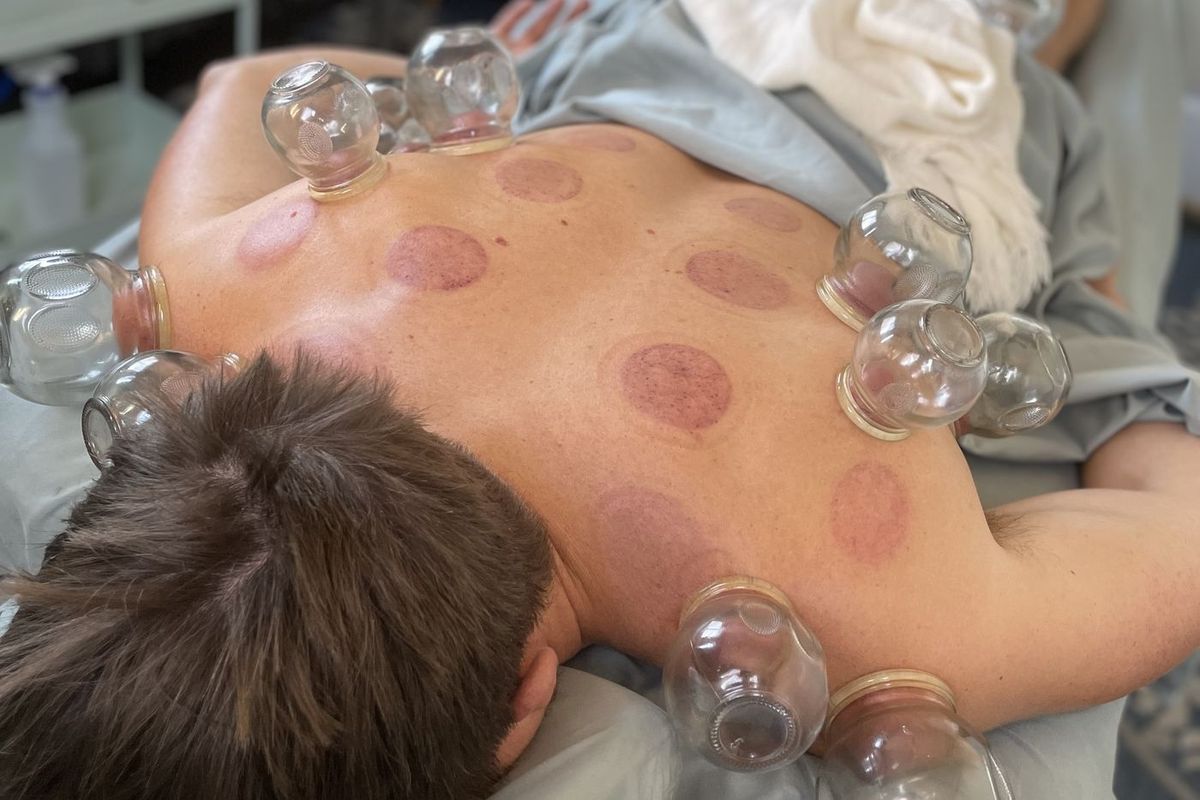
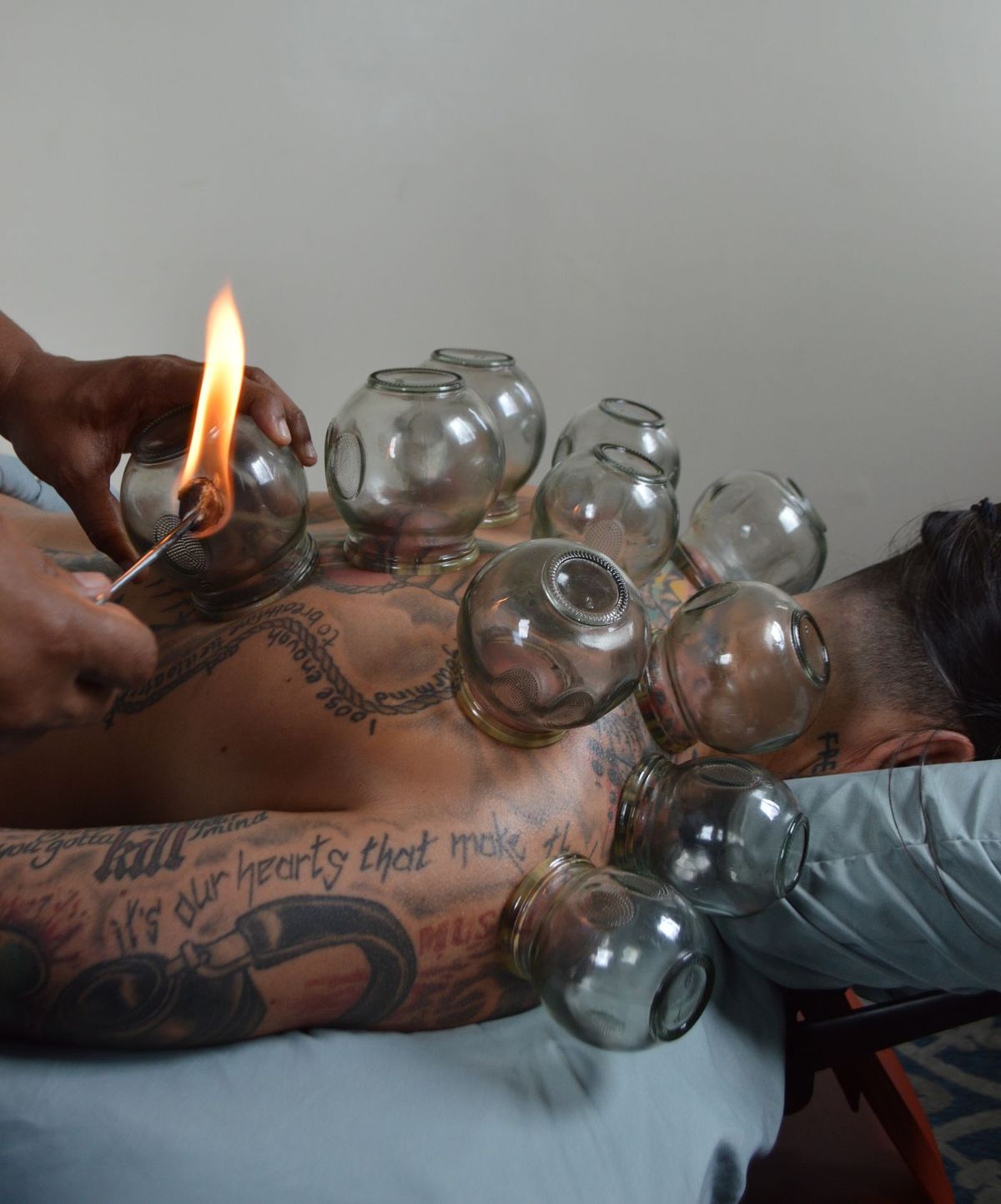
Fire cupping, muscle scraping, hot stones and assisted stretching are all included at no extra charge when they’ll help. Tell Nicole what you’ve been training, what feels tight and when your next big day is, and the session gets built from there.
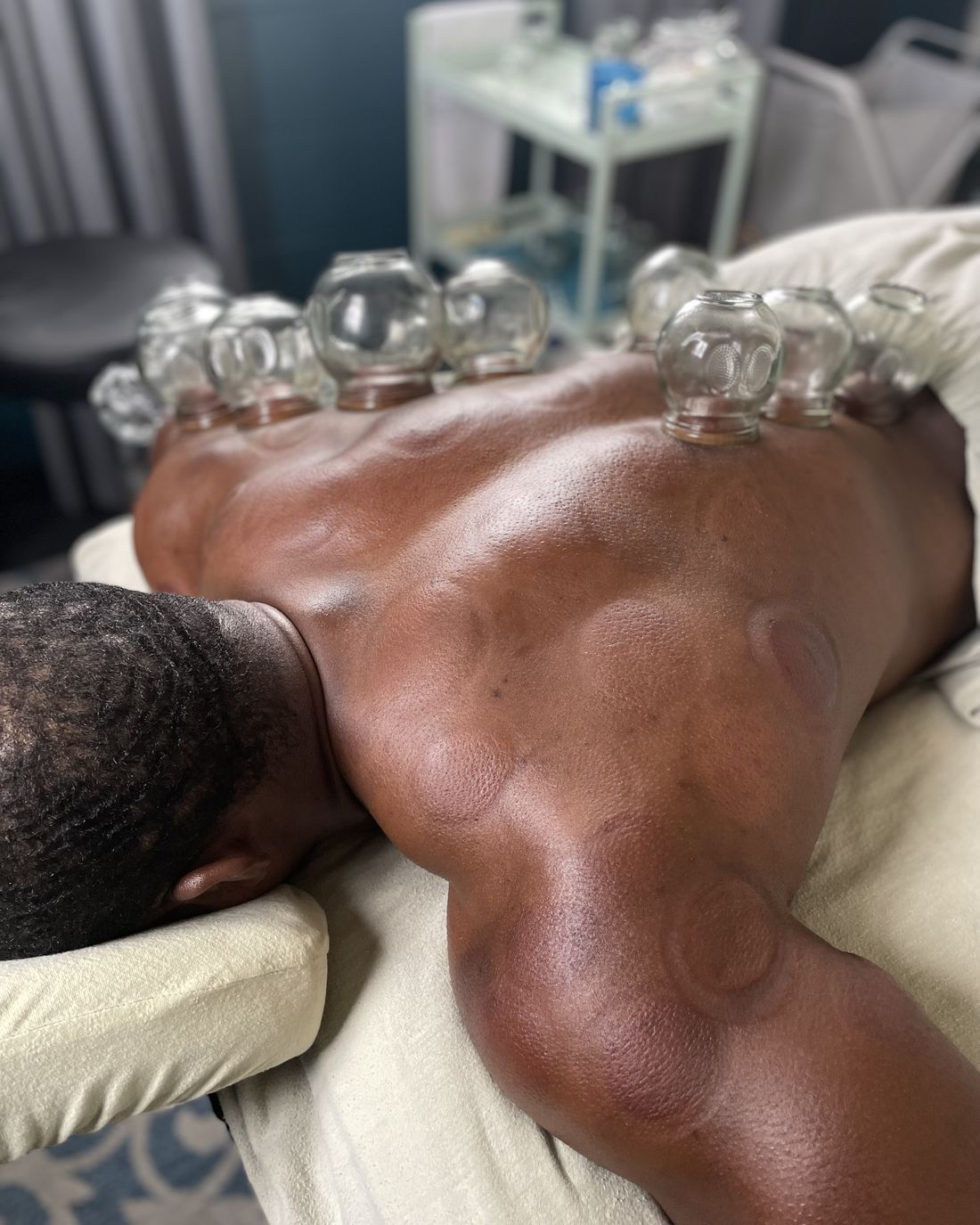
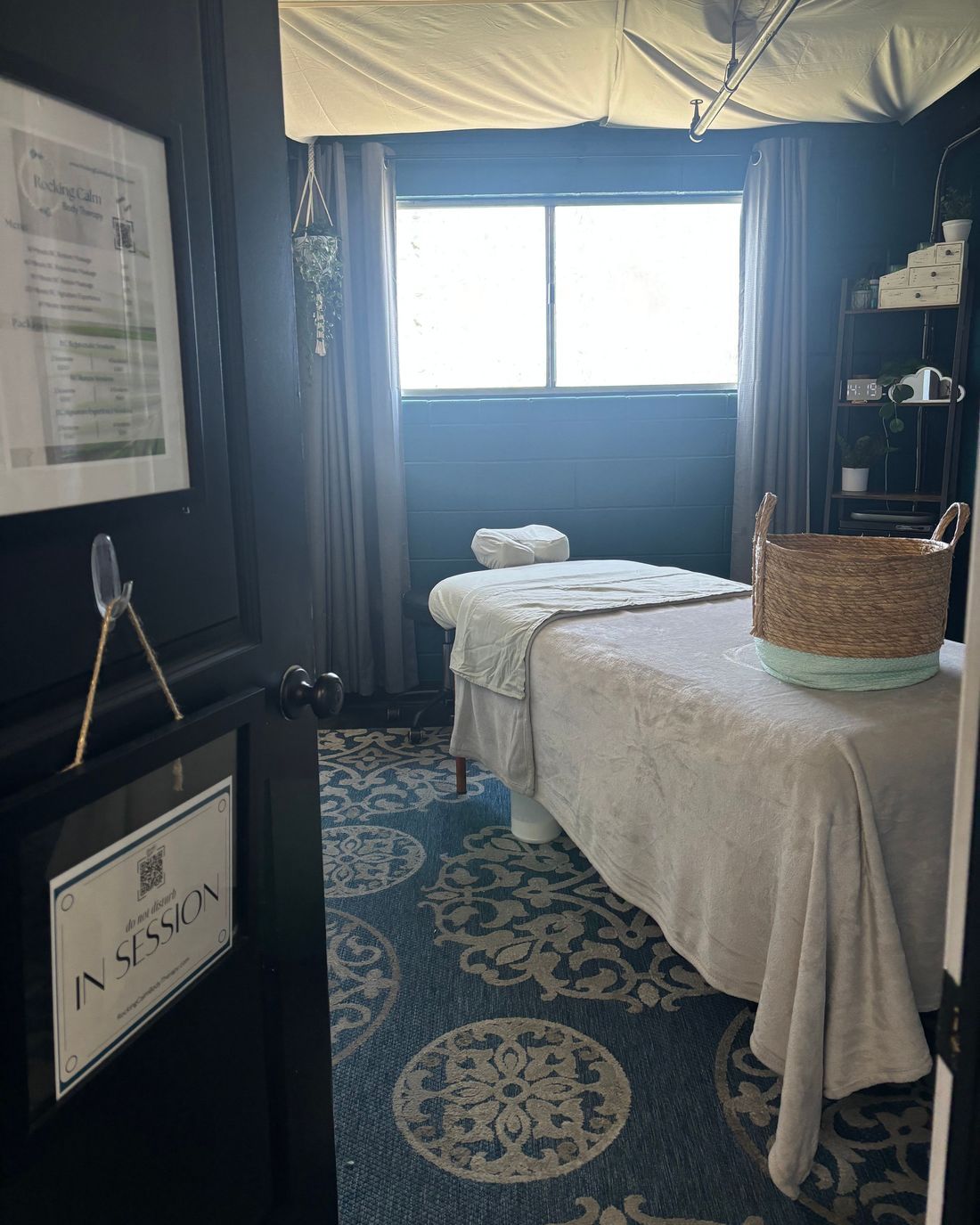
The room is on the top floor of Legacy Performance Institute in the Midway District. Coming from Point Loma or Ocean Beach? Here’s where to find it.
Which should I book: 60, 90 or 120 minutes?
At Rocking Calm you book by time, not by style. A quick guide:
- 60 minutes, $150: one or two problem areas, a lighter session in race week, or your first visit. New clients pay $85 with code INTRO85.
- 90 minutes, $190: full body plus extra time on the areas your training hits hardest. It’s the most popular session and a good default during a training block. New clients take 20% off ($152) with code FIRST20.
- 120 minutes, $240: chronic tension in several areas, a peak training week or a high-stress week, when you want deep work, stretching and cupping without rushing. New clients take 20% off ($192) with code FIRST20.
Still unsure? Book 90 and tell Nicole what you’ve been training and when your next big day is. Every session is customized, so that’s enough to shape it. Full prices, including memberships, are on the pricing page.
New here? Start with 60 minutesYour first 60 minutes is $85 (reg. $150) with code INTRO85.
Sports vs deep tissue questions
Is sports massage the same as deep tissue massage?
No, but they overlap. Sports massage is organized around your training and can include deep pressure, while deep tissue massage is defined by slower, more forceful strokes on the deeper layers of muscle and connective tissue.1,2 Many therapists blend both in one session.1
Does deep tissue massage hurt?
It shouldn’t. A tender spot can feel uncomfortable while it’s worked, but you shouldn’t feel severe pain, and some soreness the next day is possible.6 Ask for lighter pressure whenever you need it.
Is sports massage good if you don’t play a sport?
Yes, if you’re active. Sports massage focuses on the muscles worked by sports or any repetitive physical activity,1 so it suits gym regulars, runners and people with physical jobs as much as competitive athletes.
Should you get a deep tissue massage before a race?
Not right before. Event-day sports massage is short and light with no deep tissue work,3 and deeper pressure can leave you sore the next day,6 so schedule deep sessions with a few days to spare.
Can deep tissue massage cause damage?
Rarely. Massage is generally safe when done properly by a trained professional,6 but a review found rare serious side effects linked to deep tissue massage, probably from forceful pressure.5 Speak up about pressure, and check with your doctor first if you have a bleeding disorder, take blood thinners or recently had a blood clot.6
Does sports massage improve performance?
Not directly, based on current research. A 2020 meta-analysis found no evidence that it improves strength, jump, sprint, endurance or fatigue, though it may slightly improve flexibility and ease post-exercise soreness.4
Can you get sports and deep tissue massage in the same session?
Yes. At Rocking Calm every session is customized, so Nicole can blend sports-style work with deeper pressure, plus fire cupping, muscle scraping, hot stones and assisted stretching when they’ll help, all at no extra charge.
Sources
- Cleveland Clinic. Types of Massage Therapy to Try. April 6, 2021.
- Mayo Clinic Press. Back Exercises: How to Relieve Pain at Home. Excerpt from Back and Neck Health by Mohamad Bydon, M.D. Updated January 21, 2026.
- American Massage Therapy Association, Massage Therapy Journal. Game Plan: Event Day Sports Massage. Donna Shryer. August 1, 2020.
- Davis HL, Alabed S, Chico TJA. Effect of sports massage on performance and recovery: a systematic review and meta-analysis. BMJ Open Sport and Exercise Medicine. 2020;6(1):e000614.
- Koren Y, Kalichman L. Deep tissue massage: What are we talking about? Journal of Bodywork and Movement Therapies. 2018;22(2):247-251.
- Mayo Clinic. Massage therapy. Updated September 16, 2026.
This page is general information, not medical advice. Talk with your healthcare provider about whether a treatment is right for you.