Cupping marksWhat the colors mean, how long they last and how to care for them.
They’re the most visible part of cupping and the most misunderstood. Here’s what’s actually happening under your skin, a realistic fade timeline, aftercare with sources behind it, and how to plan around a wedding or a beach day.

Nicole Fry, LMT · Rocking Calm Body Therapy
Updated · 8 min read
What are cupping marks?
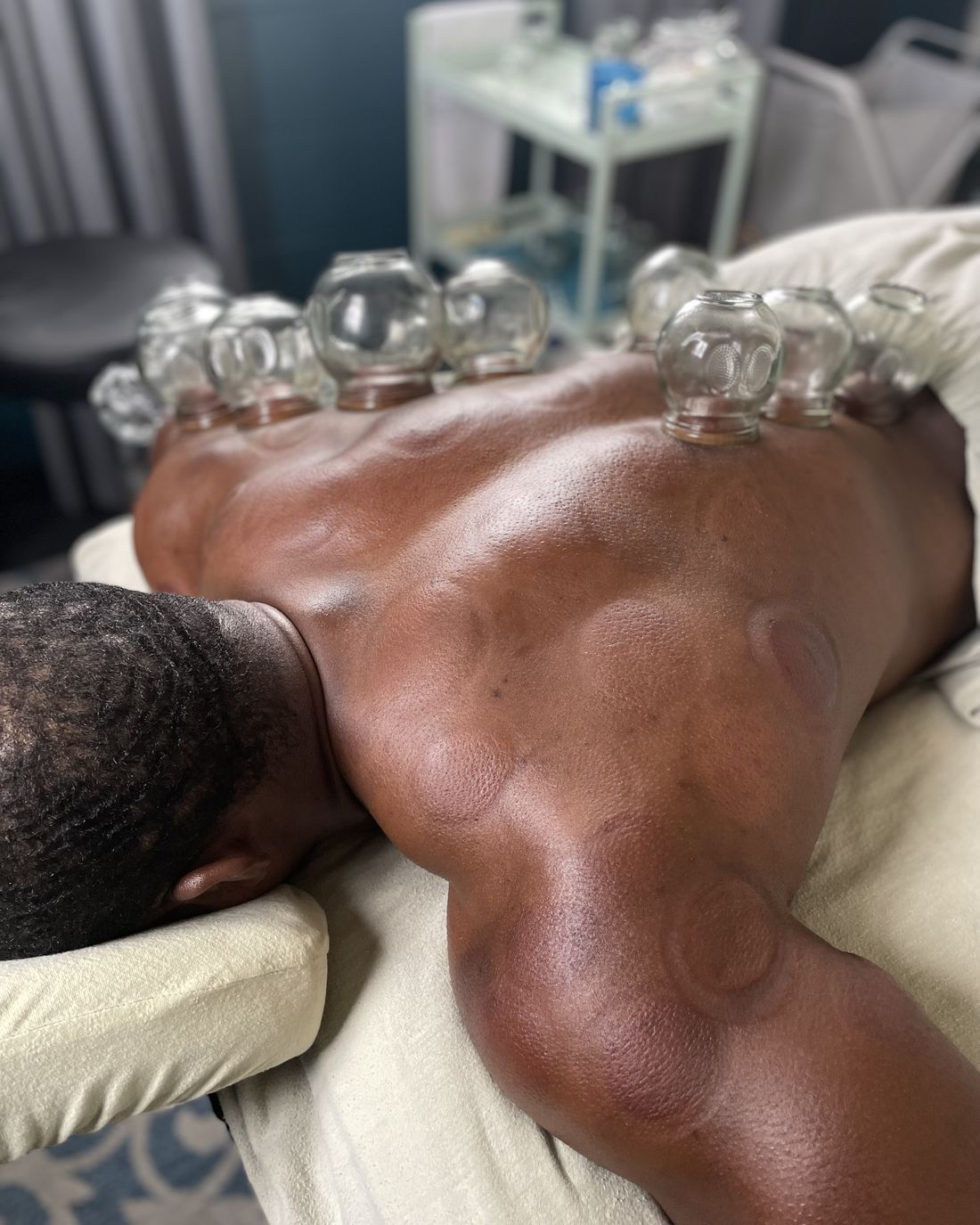
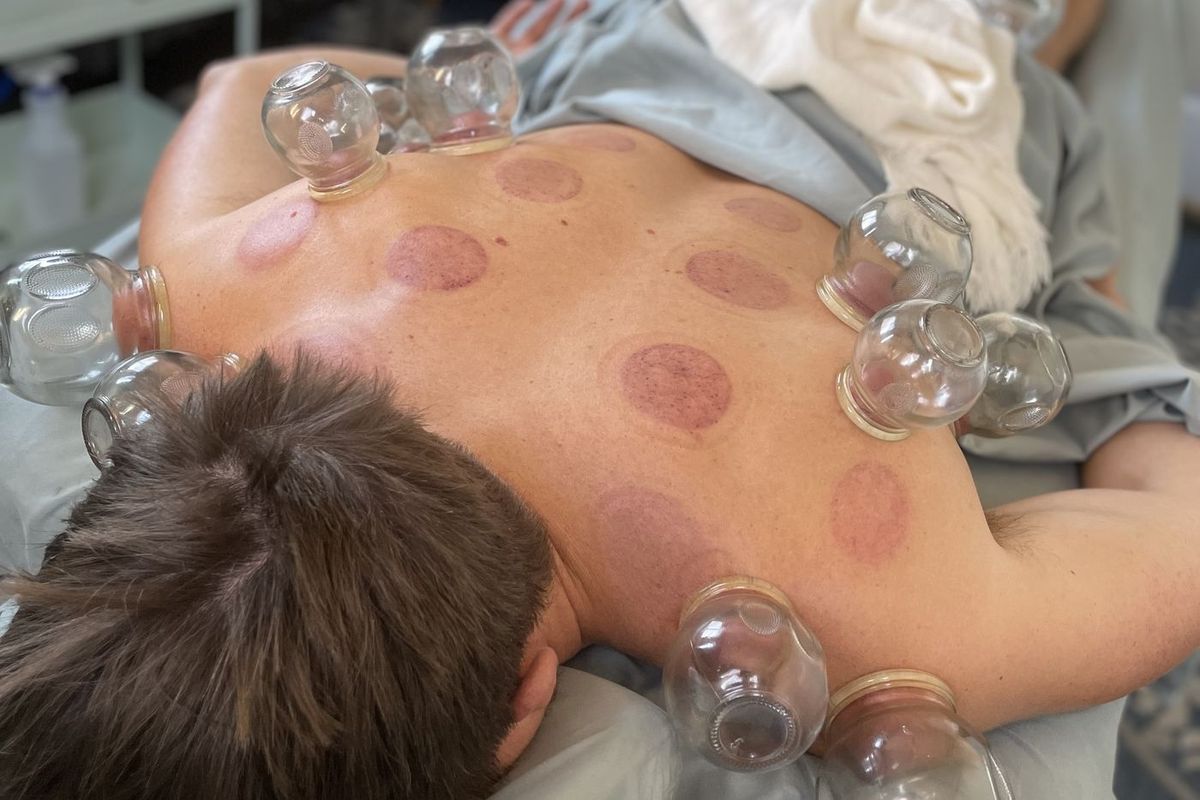
Cupping marks are the round red or purple circles left where the cups sat. Suction ruptures some of the capillaries, your smallest blood vessels, just beneath the skin, and the blood that seeps out is what you see.1,3 They look like bruises, but Cleveland Clinic points out they’re not true bruises that injure muscle fibers.1
Up close, a mark is made of two things doctors have names for. Petechiae are pinpoint red dots, and an ecchymosis is a larger bruise-like patch. Both are bleeding into the skin from broken blood vessels,4 and a systematic review on cupping describes the marks in exactly those terms.3
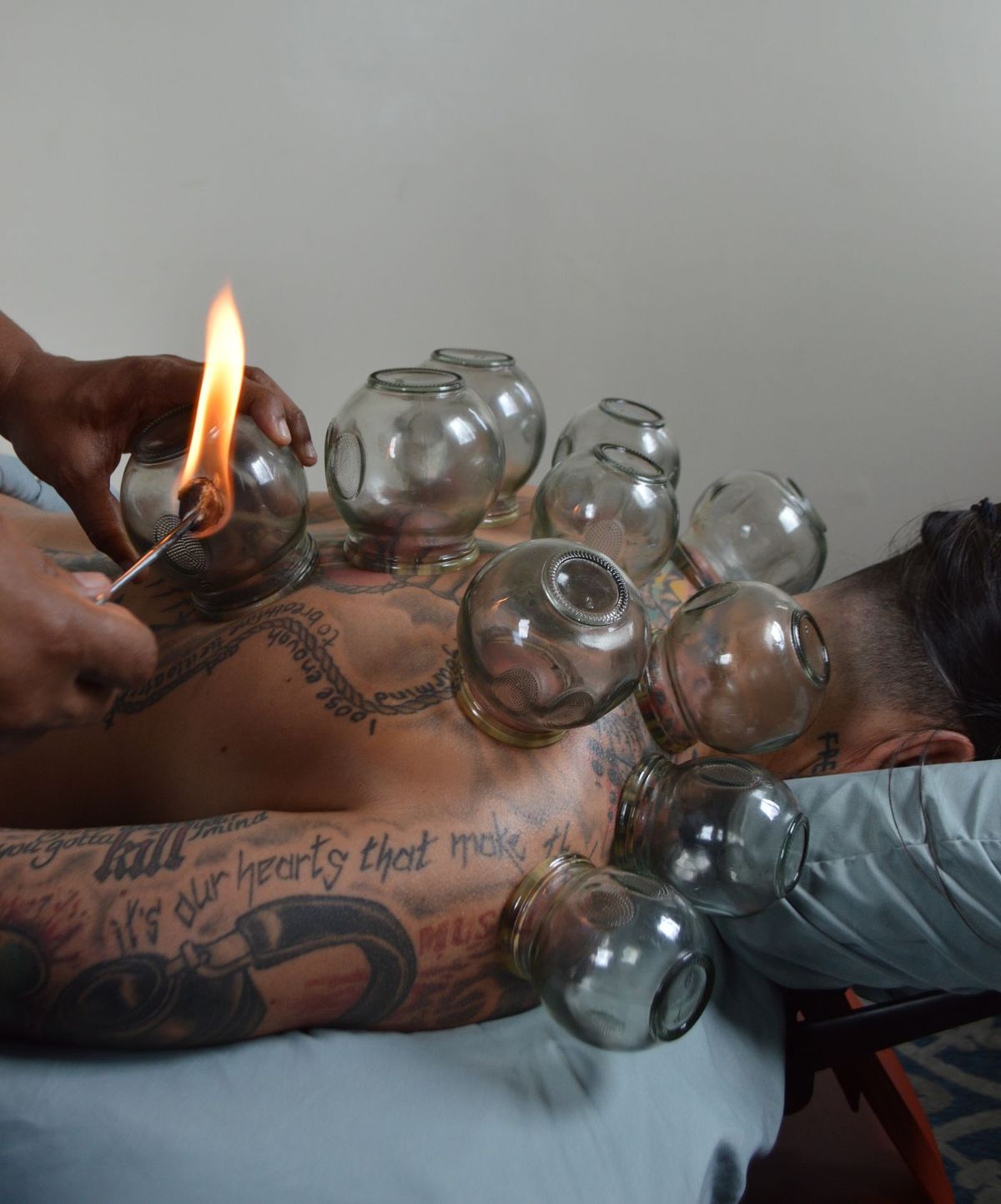
Marks are an expected part of the treatment, not a sign that something went wrong. NCCIH describes them as temporary,2 and they’re usually painless.3 Still deciding whether cupping is for you? Start with what the research says about cupping benefits, and for how it fits into a session, see the fire cupping guide.
What do cupping mark colors mean?
Short answer for anyone searching “cupping marks meaning”: the color is your own blood under the skin, and the shade mostly reflects how much is there and how fresh it is.1,5
The longer answer is where the internet gets creative. In traditional Chinese medicine, cupping marks are read as signs of “stagnation” of qi or blood, and some practitioners use them to identify problems in the body.3 Some people also believe cupping releases toxins.1 Color charts built on those ideas are easy to find online.
Here’s how the common claims stack up:
| What you’ll hear | What the evidence says |
|---|---|
| The marks are broken capillaries | Established. The suction breaks tiny vessels under the skin.1 |
| Dots and patches are different things | Established. Pinpoint dots are petechiae; larger patches are ecchymoses.3,4 |
| Marks change color as they fade | Expected. Like any bruise, blood under the skin can start red or purplish and turn a lighter brown, green or yellow as it clears.5 |
| Some people mark more than others | Likely. Anything that makes you bruise easily can play a part (more below).5 |
| Dark marks mean “stagnation” | A traditional Chinese medicine idea.3 We found no research showing mark color diagnoses anything. |
| Dark marks mean toxins are coming out | A belief, not a finding.1 The color is your own blood under the skin.4 |
| Darker marks mean a better session | No study we found links mark color to results. |
So the evidence supports only the plain reading from the top of this section. We couldn’t find research showing that color tells you anything more.
Why are some cupping marks darker than others?
Cupping marks are bleeding under the skin,4 so the things that make anyone bruise more easily can matter here too. Cleveland Clinic’s list of factors behind easy bruising includes:5
- blood thinners or aspirin
- aging skin
- family members who bruise easily
- a vitamin C or vitamin K deficiency
- bleeding disorders or a low platelet count (Cleveland Clinic also lists bleeding disorders as a reason to skip cupping altogether)1
If you bruise easily everywhere, or your marks suddenly come out much darker than they used to, mention it to your doctor. Unexplained bruising deserves a checkup on its own.4,5
Skin tone changes the look, too. On darker skin, bruising may show up as purple, dark brown or black,5 so don’t judge your marks against photos online.
What about technique? The marks come from the suction itself,1 and in Nicole’s experience, lighter suction and shorter cup times leave lighter marks, so she can turn both down if you need to keep them faint.
How long do cupping marks last?
Usually one to two weeks. Cleveland Clinic says the marks should fade in a week or two,1 and a systematic review put the range at 1 to 10 days.3 As with bruises in general, more severe marks can take longer.5
A realistic timeline:
| When | What you’ll likely see |
|---|---|
| Right after | Round red or purple marks where the cups sat, sometimes dotted with petechiae.1,3 |
| First few days | Still clearly visible. The area may feel a little bruised, but the marks themselves usually don’t hurt.1,3 |
| About a week | Fading, often through lighter brown, green or yellow tones, the way bruises clear. Some marks are already gone.3,5 |
| Two weeks | Most marks have faded.1 One that’s still there after two weeks is worth showing your doctor.5 |
Rarely, cupping leaves discoloration that lasts much longer, or a scar.2
Cupping aftercare: what to do after cupping
We couldn’t find studies that test cupping aftercare routines, so here’s what medical sources actually support:
- Leave the marks alone. They fade without help, the way most bruises clear within two weeks without treatment.1,5
- Care for tender spots like a bruise. If an area feels bruised, Cleveland Clinic’s bruise advice applies: an ice pack wrapped in a towel, no more than 15 minutes at a time, during the first 24 to 48 hours, then a warm compress after two days.5
- Keep an eye on the cup sites for a few days. The warning signs are listed below.
- Try not to scratch. Itching is on Cleveland Clinic’s list of possible side effects,1 and broken skin is the last thing you want over a fresh mark.
- Give the area time before the next round. A review of cupping research notes that sessions need spacing so the skin and the tissue beneath it can recover.3 Letting the marks fade before that spot is cupped again is a simple way to do that.
- Tell your other providers. If anyone in a medical setting will see your back in the next week or two, from your doctor to a nurse, mention the cupping first. NCCIH says the origin of the marks should be explained so they’re never taken for signs of physical abuse.2
Nicole will tell you if she has specific advice for your session.
What about the stricter rules you’ll see online, like drinking extra water to flush toxins, skipping showers or avoiding cold air? We couldn’t find research behind them, and the toxin idea is a belief some people hold, not a measured effect.1
Showers, workouts and the ocean? We couldn’t find research on those either. Fire cupping is a dry method, so it doesn’t break the skin,1,2 and none of the medical sources we used say to avoid water or exercise afterward. Let comfort be your guide, and if a cup site is burned or broken, get it looked at before you head into the ocean.
Plan your cuppingA 45-minute fire cupping session is $95. Book it two weeks before anything you want clear skin for.
When should you see a doctor about cupping marks?
Normal marks fade on their own.1 Get checked if you notice:
- a burn, extreme pain or soreness, or a fever after cupping1
- signs of infection at a cup site, like redness, tenderness or yellow discharge1
- a mark that lasts more than two weeks, or a lump under one5
- bruising you can’t explain, away from where the cups were4,5
Bruise easily or take a blood thinner? Talk to your doctor before your first session, since those are the same factors that make bruising more likely in general.5 The full list of people who should skip cupping is in Does cupping hurt?
How do you plan cupping around a wedding, photos or the beach?
Because marks can take up to two weeks to fade,1 timing matters if you’ll be in a swimsuit, a backless dress or in front of a camera.
- Two weeks or more away: fine for cupping. Most marks will have cleared by then.1,3
- Less than two weeks away: tell Nicole the date when you book. You can skip the cups and keep the rest of the massage, or ask her to place them only where your outfit hides them.
- A few days away: skip cupping this time. We don’t know of any proven way to make marks fade faster.
For a Saturday wedding, that means booking cupping no later than two Saturdays before, which gives the marks the full two weeks.

In San Diego, beach plans deserve a thought. Rocking Calm is minutes from Ocean Beach and Mission Bay, so if a beach day, a race photo or a pool party is on the calendar, count back two weeks before you book cupping. The massage itself is still on the table; lengths and prices are on the pricing page.
Massage first, cups if you want themNew clients: first 60 minutes $85 with code INTRO85.
Cupping marks questions
How long do cupping marks last?
Usually one to two weeks. Cleveland Clinic says they should fade in a week or two, and a systematic review put the range at 1 to 10 days.1,3 More severe marks can take longer, as bruises do.5
What do dark cupping marks mean?
They mean blood from broken capillaries has collected under your skin.1 Traditional Chinese medicine reads darker marks as a sign of “stagnation,”3 but we found no research showing that mark color diagnoses anything.
Do cupping marks mean toxins are being released?
We found no good evidence of that. The belief exists,1 but what you’re looking at is your own blood under the skin, leaked from capillaries the suction broke.1,4
Are cupping marks bruises?
Sort of. They’re blood under the skin from broken capillaries, like a bruise, but Cleveland Clinic says they aren’t true bruises that injure muscle fibers.1,4
How do you get rid of cupping marks faster?
We don’t know of a proven shortcut. Marks fade on their own, and if a spot is tender, an ice pack wrapped in a towel early on and warmth after two days can make it more comfortable.5
Should you tell your doctor about cupping marks?
Yes, if they’ll see them. NCCIH recommends explaining where the marks came from, because they can otherwise be mistaken for signs of physical abuse.2
Is it bad if cupping doesn’t leave marks?
No. We found no research linking marks to results, so faint marks, or none at all, don’t mean the session failed.
Sources
- Cleveland Clinic. Cupping Therapy: Definition, Types & Benefits. Medically reviewed, last updated June 7, 2023.
- National Center for Complementary and Integrative Health (NIH). Cupping. Last updated November 2018.
- Moura CC, Chaves ÉCL, Cardoso ACLR, et al. Cupping therapy and chronic back pain: systematic review and meta-analysis. Revista Latino-Americana de Enfermagem. 2018;26:e3094. Full text on PMC.
- MedlinePlus (U.S. National Library of Medicine). Bleeding into the skin. Reviewed April 1, 2025.
- Cleveland Clinic. Bruises (Ecchymosis): Symptoms, Causes, Treatment & Prevention. Medically reviewed, last updated January 26, 2023.
This page is general information, not medical advice. Talk with your healthcare provider about whether a treatment is right for you.