Does cupping hurt?What it feels like, and how to keep it comfortable.
It shouldn’t. Here’s what still, gliding and fire cups actually feel like, what makes cupping uncomfortable, how sore you might be afterward, and the kinds of pain that mean stop.

Nicole Fry, LMT · Rocking Calm Body Therapy
Updated · 8 min read
Does cupping hurt? The short answer
No, cupping shouldn’t hurt. Cleveland Clinic puts it the same way: no pain, though your skin may feel tight while the cups are on.1 So if you’re asking “does cupping hurt?” before your first session, expect a strong, steady pull, and treat any real pain as your cue to speak up.
The feeling is unfamiliar mostly because it works in the opposite direction from the rest of a massage. Instead of pressure going in, the cup draws your skin and the tissue under it up into the glass.1 Give it a minute before you decide how you feel about it.
What does cupping feel like?
That depends on how the cups are used. Nicole may use cups that stay put, cups that glide, or both, depending on the area.
Stationary cups
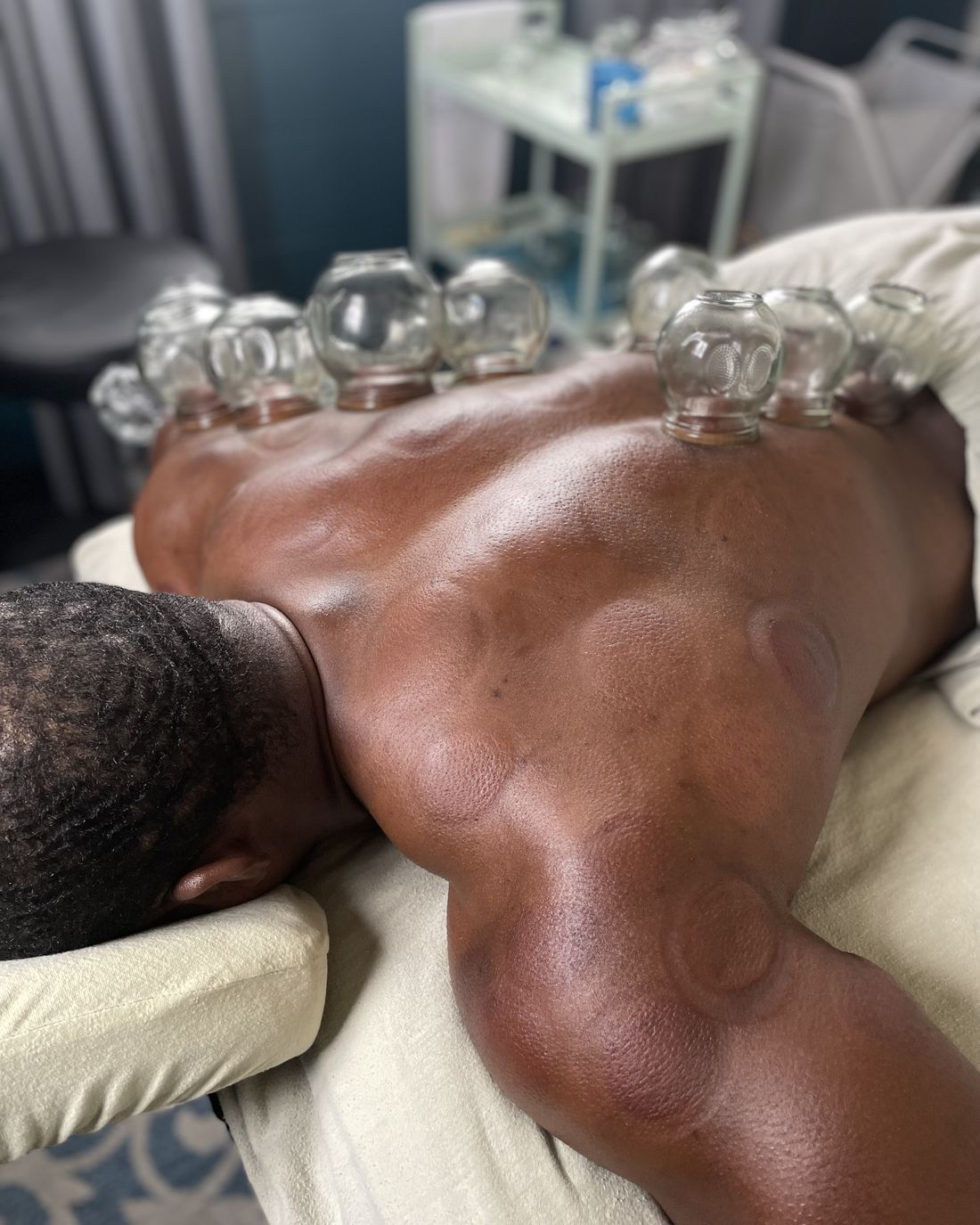
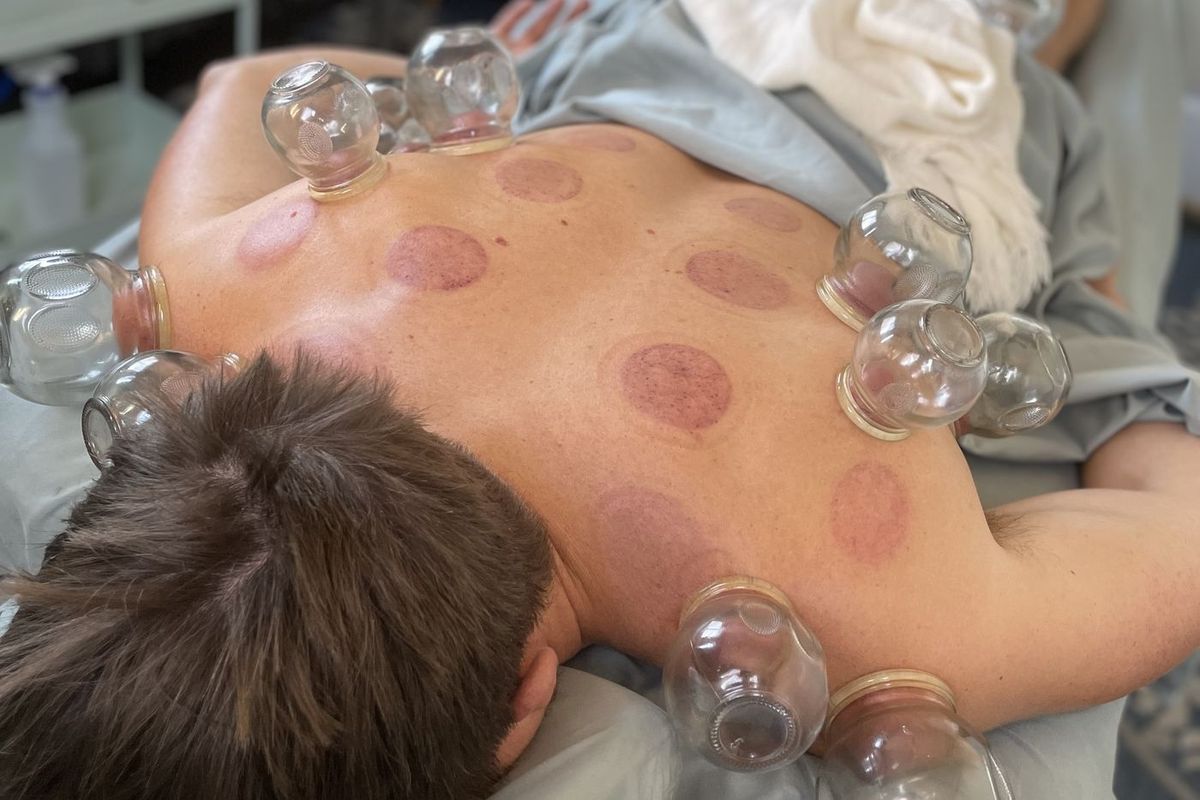
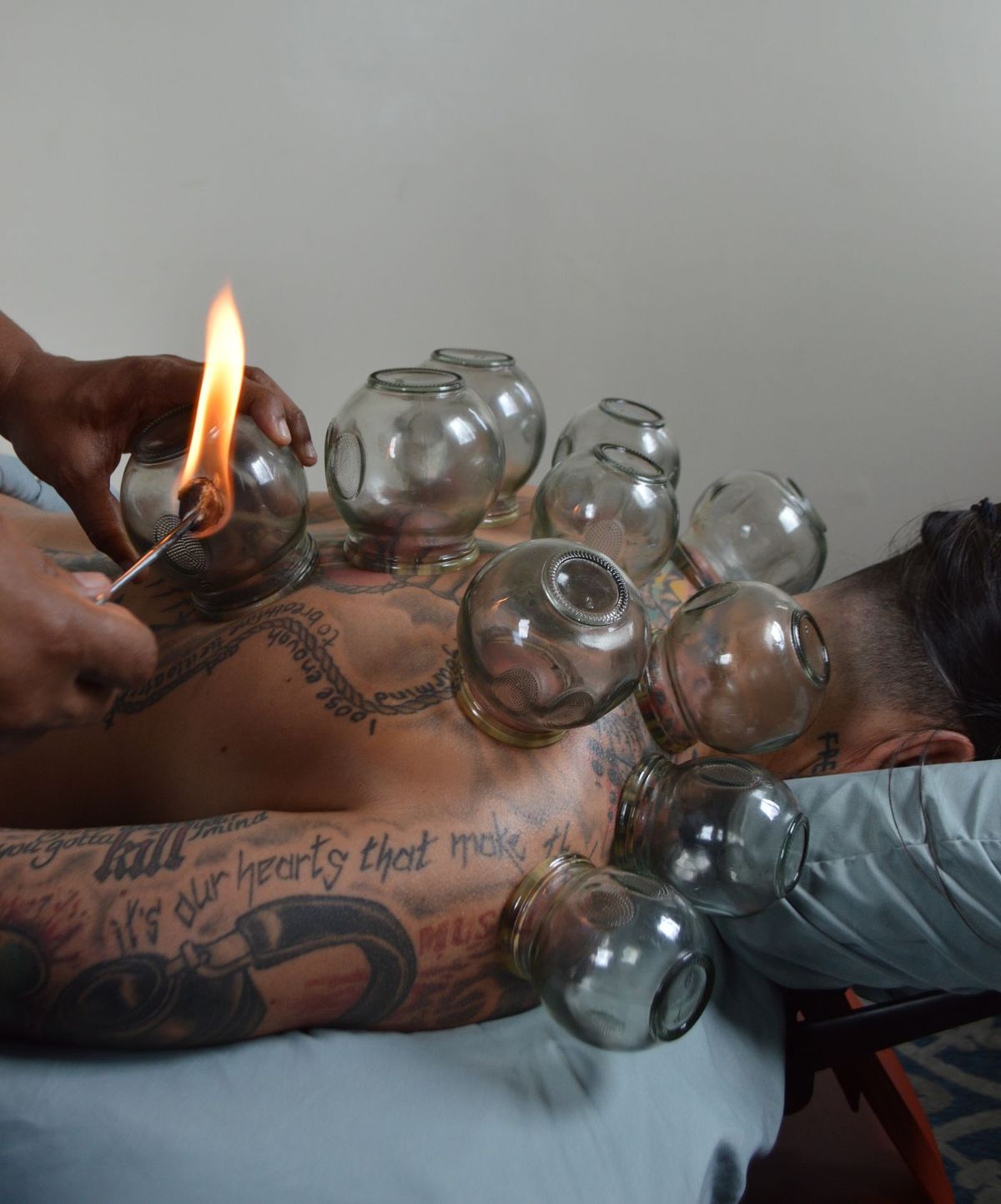
The cups go on and stay in place for several minutes; some cupping experts recommend 5 to 10 minutes or more.1,4 You’ll feel a firm grip around each rim and a lift in the middle, as if the skin is being drawn gently into the glass. On a tight upper back, it can feel like a deep stretch you didn’t have to do yourself.
Running (gliding) cups
For running cupping, oil or lotion goes on your skin first so the cups can move across the muscle. Moving cups stretch and massage the area,1 so it feels like a slow massage stroke that lifts instead of presses, and you’ll notice tender spots as the cup passes over them.
Fire cups
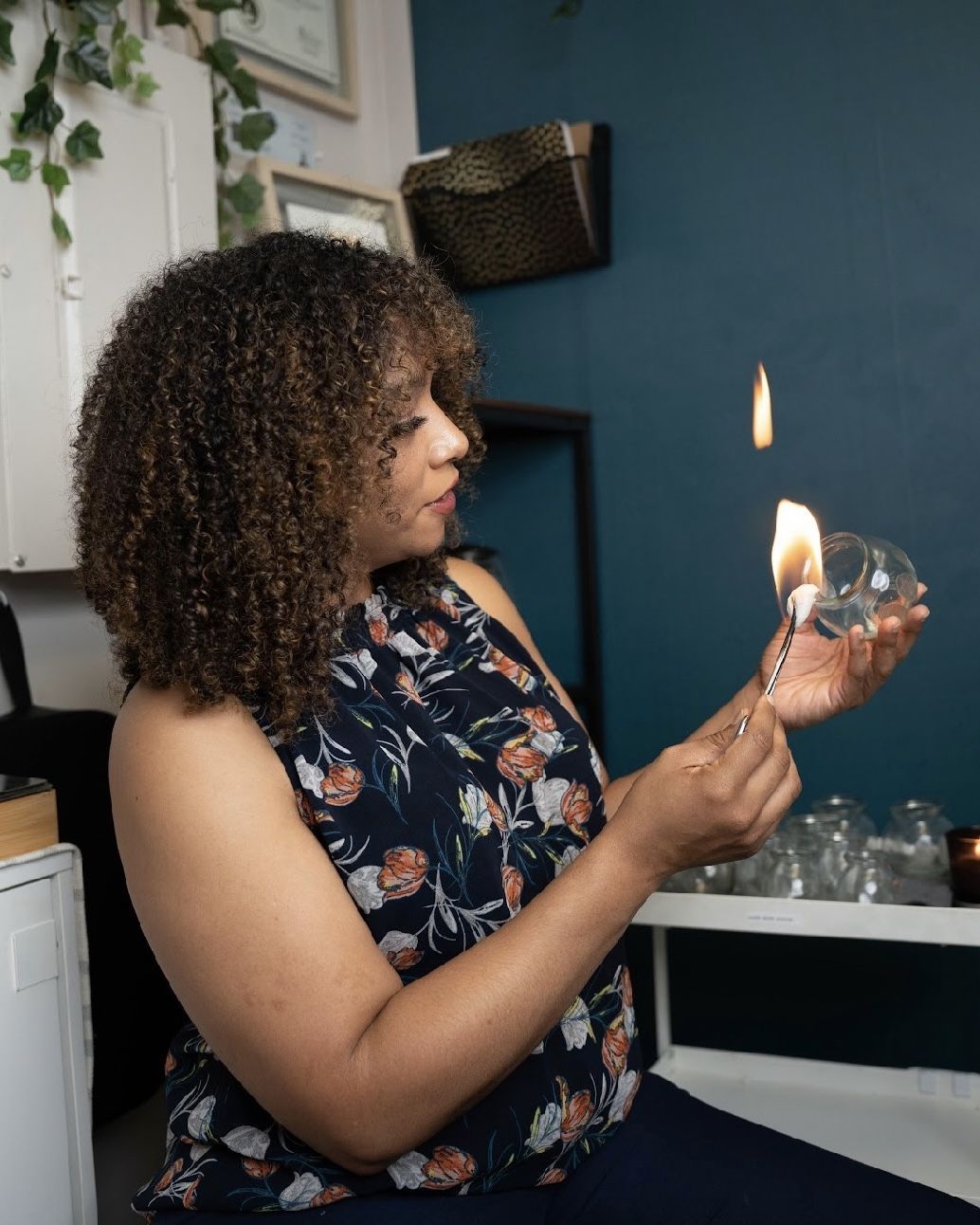
The fire is only there to make the suction. In the traditional method, a lit, alcohol-soaked cotton ball heats the inside of the glass, and the heat creates a vacuum.1 The flame is out of the cup before the glass touches you, so what you feel is the grip, not the fire. The rim shouldn’t feel hot. If it ever does, say so right away, because burns from heated cups are a known risk of fire cupping.1,4
Why does cupping sometimes hurt?
When cupping does feel bad, it’s usually one of these:
- More suction than you need. A stronger vacuum means a stronger pull, and stronger isn’t automatically better. We found no research showing that a more intense session works better.
- A spot that was already tender. A cup over a sore, knotted area feels stronger, the same way pressure on a knot does in a massage.
- Cups on the move. Gliding cups stretch the tissue as they travel,1 which can feel intense over tight spots.
- Irritated skin. Cupping may worsen eczema or psoriasis,2 so a flare-up is a reason to skip the cups that day.
- A hot rim. With fire cupping, heat on your skin is a problem, not part of the treatment.1
Most of these are solved by easing the suction or moving the cup. Heat on your skin means the cup comes off.
Does cupping hurt more than deep tissue massage?
It’s a different kind of intensity, not necessarily more of it. Deep tissue work presses slowly into tight muscle, while a cup lifts the skin and tissue instead.1 Which one feels stronger varies from person to person and from spot to spot, so the only way to know is to try both.
At Rocking Calm you don’t have to choose ahead of time. Every massage is customized, so Nicole can move between deep tissue work, cups and lighter techniques based on how your body responds. Muscle scraping is another option for stubborn spots, with a feel of its own.
Is it normal to be sore after cupping?
A little, yes. Mild tenderness is common: Cleveland Clinic says the area may feel bruised and a bit sore, though nothing severe.1 The round marks themselves usually don’t hurt.4
Clinical trials point the same way. A 2018 review of 18 neck pain trials found that, in the trials that tracked them, side effects were mostly mild and temporary. Examples included muscle soreness, a small bruise, headaches that cleared within an hour, and in two people, neck pain that flared for one to five hours.3
Less common reactions include fatigue, headaches and nausea.1 If you feel unwell after a session and it doesn’t pass, call your doctor. For what the marks will do over the next week or two, see cupping marks: colors, timeline and aftercare.
How do you keep cupping comfortable?
You set the intensity. These help the most:
- Share your health history and medications first. Some conditions and medicines change whether cupping is a good idea (see who should skip it). Nicole asks before any cups go on.
- Point out sore or injured spots. Tell Nicole where you’re tender or recovering before the cups come out, so those areas can be skipped or approached gently.
- Ask for a light first session. Nicole can start with lighter suction and fewer cups, then build if you like it.
- Speak up early. Say “lighter” the moment the pull goes past comfortable. Easing the suction or lifting a cup takes seconds.
- Choose still or gliding. If moving cups are too much, ask for stationary ones instead.
- Flag anything sharp, burning or pinching right away. That isn’t the normal pull, and it isn’t something to push through.
Try cupping on its own45 minutes of fire cupping, $95. You set the intensity.
What should you expect at your first cupping session?
- It’s dry cupping. Rocking Calm offers fire cupping, a dry method, so nothing pierces your skin.1,2 Wet cupping, where the skin is pierced and blood flows into the cup, is a different practice.2
- You can try it inside a massage. Fire cupping is included in every 60, 90 and 120-minute massage when it’ll help, so your first cups can be one part of a mostly hands-on session. New clients get their first 60 minutes for $85 with code INTRO85; see pricing for everything else.
- You’ll probably leave with marks. Round red marks are expected and should fade in a week or two,1 so check your calendar for beach days and photos before you book.
- You can change your mind. Every massage is customized, and you can ask to skip the cups at any point.
- Clean cups matter. Cups can pick up traces of blood even in dry cupping, and NCCIH warns that sharing them without sterilizing between people can spread hepatitis B and C.2 Reusable cups need high-level disinfection or sterilization before the next person.4 Nicole cleans and disinfects her glass cups between clients.
For how a cupping session runs at Rocking Calm, see the fire cupping guide. Still deciding whether it’s worth trying? Here’s what the research says about cupping benefits.
When is cupping pain a warning sign?
Normal cupping feels like a pull. These don’t, and they’re worth acting on.
During the session
Sharp, burning, stinging or pinching pain, or a cup that feels hot, means the cup should come off now. Burns are a documented risk of fire cupping.1,4 Feeling faint is worth mentioning too. Fainting is rare, and it’s most common after wet cupping in people who pass out with needle sticks.1
After the session
Get in touch with your doctor if, in the days after, you find a burn, have pain or soreness that feels extreme, run a fever, or notice a cup site turning red and tender or producing yellow discharge.1 NCCIH notes that cupping can also leave lasting skin discoloration or scars, and that it may make eczema or psoriasis worse.2
Who should skip cupping?
Cleveland Clinic lists several groups who shouldn’t have cupping:1
- Pregnancy. Researchers know very little about cupping’s effects during pregnancy.
- Blood and heart conditions: anemia, a bleeding disorder such as hemophilia, a clotting problem such as deep vein thrombosis, a history of stroke, cardiovascular disease or a pacemaker.
- Skin conditions such as eczema or psoriasis.
- Seizure disorders such as epilepsy.
On a blood thinner? Talk to your doctor before trying cupping. Cupping works by breaking small blood vessels under the skin,1 and anticoagulants such as warfarin and heparin, and aspirin, can cause bleeding into the skin on their own.5 That combination deserves a medical opinion first.
Your first cupping, inside a massageNew clients: first 60 minutes $85 with code INTRO85.
Cupping pain questions
Is cupping supposed to hurt?
No. Expect skin tightness and a steady pull rather than pain.1 If it starts to hurt, tell your therapist right away; easing the suction or lifting the cup takes seconds.
Does fire cupping hurt more than other cupping?
It shouldn’t. The flame only heats the air inside the glass to create suction, so what you feel is the pull, not the fire.1 A rim that feels hot isn’t normal, since burns from heated cups are a known risk.1
What does cupping feel like?
Like a firm, steady pull drawing your skin up into the cup. Gliding cups feel more like a slow massage stroke that lifts instead of presses, because they stretch the tissue as they move.1
How long does soreness last after cupping?
Usually not long. In clinical trials, side effects like soreness were mostly mild and temporary, and in one trial they cleared within a few days.3 Extreme pain or soreness is a reason to call your doctor.1
Sources
- Cleveland Clinic. Cupping Therapy: Definition, Types & Benefits. Medically reviewed, last updated June 7, 2023.
- National Center for Complementary and Integrative Health (NIH). Cupping. Last updated November 2018.
- Kim S, Lee SH, Kim MR, et al. Is cupping therapy effective in patients with neck pain? A systematic review and meta-analysis. BMJ Open. 2018;8(11):e021070. Full text on PMC.
- Moura CC, Chaves ÉCL, Cardoso ACLR, et al. Cupping therapy and chronic back pain: systematic review and meta-analysis. Revista Latino-Americana de Enfermagem. 2018;26:e3094. Full text on PMC.
- MedlinePlus (U.S. National Library of Medicine). Bleeding into the skin. Reviewed April 1, 2025.
This page is general information, not medical advice. Talk with your healthcare provider about whether a treatment is right for you.