How often should you get a massage?An honest answer, by goal, training load and budget.
There’s no magic number. Here’s how to find a rhythm that fits your goals and your budget, what the research does and doesn’t show, and the signs you’re due.

Nicole Fry, LMT · Rocking Calm Body Therapy
Updated · 9 min read

How often should you get a massage?
For most people, the honest answer to “how often should you get a massage?” is every two to four weeks, and where you land depends on your goals, your training load, how much you sit at a desk, your budget and how your body responds.
Heavy training or injury rehab can justify weekly sessions for a while. Simple upkeep can stretch to every four to six weeks. Someone training for a marathon and someone who wants a monthly reset are asking the same question and getting different answers.
One thing up front: these are practical rhythms, not a proven prescription. Research hasn’t pinned down an ideal schedule for healthy adults. The studies that compare schedules mostly involve specific pain problems,2 and for problems like neck and shoulder pain, the benefits may only last a short time.1 That last point is the real case for consistency.
How often should you get a massage for your goals?
Find the row that sounds most like your week, then let your body fine-tune it.
| Your situation | A realistic rhythm | Session length to consider |
|---|---|---|
| Training for a race, meet or fight | Every one to two weeks during your hardest block | 90 minutes, or 60 in race week |
| Lifting heavy or training most days | Every two to four weeks | 60 or 90 minutes |
| Desk work and stress | Every two to four weeks | 60 minutes for neck and shoulders, 90 for full body |
| Rehabbing an injury | Whatever your doctor or physical therapist recommends | 60 minutes, focused |
| Feeling good and staying loose | Every four to six weeks | 60 or 90 minutes |
If you’re training for an event
Every one to two weeks is reasonable during your hardest block. In a review of post-exercise recovery methods, massage looked like the most effective option for easing delayed onset muscle soreness and perceived fatigue.3 That’s about soreness and how tired you feel, not race times.
Timing matters as much as frequency. Book deeper work early in the week or after your longest session, and keep the days right before a race light, since deeper massage can leave you a bit sore the next day.4 The guide to sports massage vs deep tissue covers race-week timing, and sports massage at Rocking Calm can be shaped around whatever you’re training for.
If you lift heavy or train most days
Every two to four weeks is a solid rhythm. Book it on a rest day or right after your heaviest session, not the day before. Soreness after a massage is normal, especially if it’s been a while since your last one, and it usually lasts a few hours to about a day and a half.5
Assisted stretching is included in every Rocking Calm massage when it’ll help, so tight hips and hamstrings can get attention in the same hour.
If you sit at a desk or carry a lot of stress
Start with every two to four weeks. Research suggests massage may reduce stress, ease muscle stiffness and tension, and support relaxation.4 Because relief from neck and shoulder pain may not last long,1 a regular hour makes more sense than one big session after things get bad.
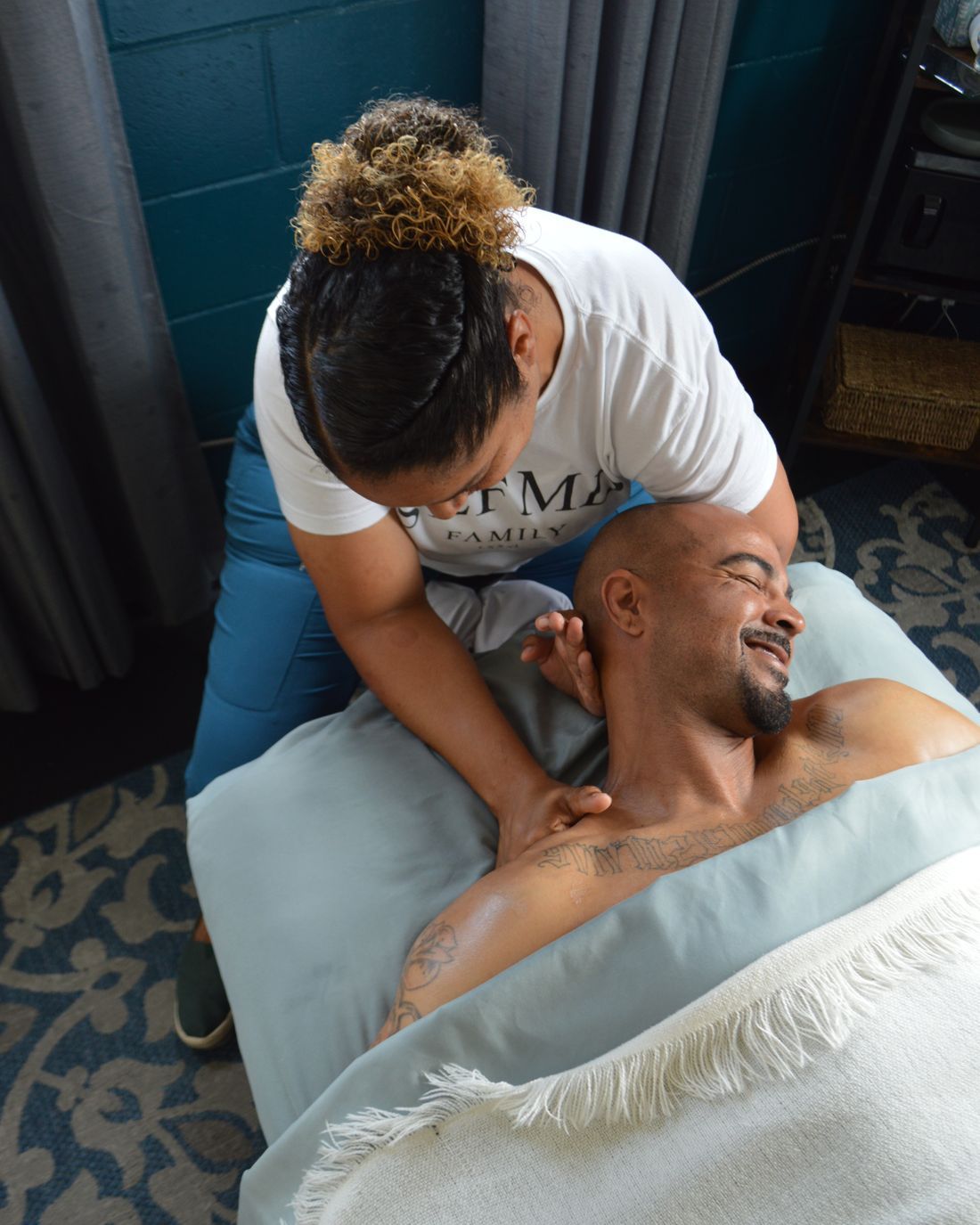
Between sessions, get up from your desk and move often. Think of massage as one part of the plan, not the whole plan.
If you’re rehabbing an injury
Get your doctor’s or physical therapist’s OK first, then follow their plan. Massage shouldn’t delay care for a medical problem.1 For some pain problems, research suggests that getting enough massage in the first few weeks matters,2 so a closer run of sessions at the start, then a wider rhythm, is a reasonable plan to talk through with your provider.
If you just want to feel good
Every four to six weeks is a sustainable rhythm for upkeep. If tension creeps back before your next visit, move the next one up. If you still feel loose at week six, you’ve found your interval.
Not sure where to start?New clients: your first 60 minutes is $85 (reg. $150) with code INTRO85.
What does research say about how often to get a massage?
Less than you’d hope. Many massage studies simply pick a schedule, like once a week for eight weeks, rather than testing which schedule works best.1 The ones that do compare doses look at specific conditions over a few weeks:
- Chronic neck pain. After four weeks, 60-minute sessions two or three times a week did better than 30 or 60 minutes once a week. People who then added one session a week for six more weeks had better pain and function at the end than those who stopped, but the gap closed at later follow-up.2
- Knee osteoarthritis. In an eight-week dosing study, only people who got at least 480 minutes of massage in total (about an hour a week) improved substantially compared with usual care.2
- Healthy adults. A small pilot study compared weekly and twice-weekly Swedish massage for five weeks and found cumulative changes in some hormone and immune markers that differed by schedule. It was small, and it measured blood markers, not how people felt.6
- People who train. Massage may ease soreness and perceived fatigue after hard exercise,3 but those studies look at recovery from a workout, not at how many sessions a month is ideal.
Put together: for some pain problems the amount of massage seems to matter, the effects tend to fade without follow-up, and nobody can hand you a proven number for a healthy body.1,2 That’s why the practical answer starts with your goals and adjusts to how you respond.
What are the signs you need a massage?
Your body usually tells you before your calendar does. Watch for these:
- Tightness is back well before your next appointment.
- Checking your blind spot or looking up from your laptop takes more effort than it did a couple of weeks ago.
- Warm-ups take longer, or your usual training feels heavier than it should.
- You catch yourself clenching your jaw or holding your shoulders up near your ears.
- You keep saying “I should book a massage.”
Use these signs to tune your rhythm. If relief fades within a week, come back sooner for a while. If you still feel good at week five, stretch the gap. Track it for a couple of months and your interval usually becomes obvious.
One exception: new or unexplained pain, or anything that feels like an injury rather than tightness, is a reason to see a doctor first. Massage shouldn’t be a way to put that off.1
How often is too often to get a massage?
For most healthy people, there’s no set limit. Massage is generally safe when it’s done properly by a trained professional, and serious side effects are rare.4 The practical limit is recovery: if an area is still sore from the last session, give it time before it gets deep work again.5
More often should usually mean lighter, not deeper. Rare serious problems, such as a blood clot, nerve injury or bone fracture, have been reported, and some involved vigorous deep tissue massage or people at higher risk of injury, like older adults.1 If you come in weekly, mix in lighter sessions and save deep tissue work for when you’ve recovered.
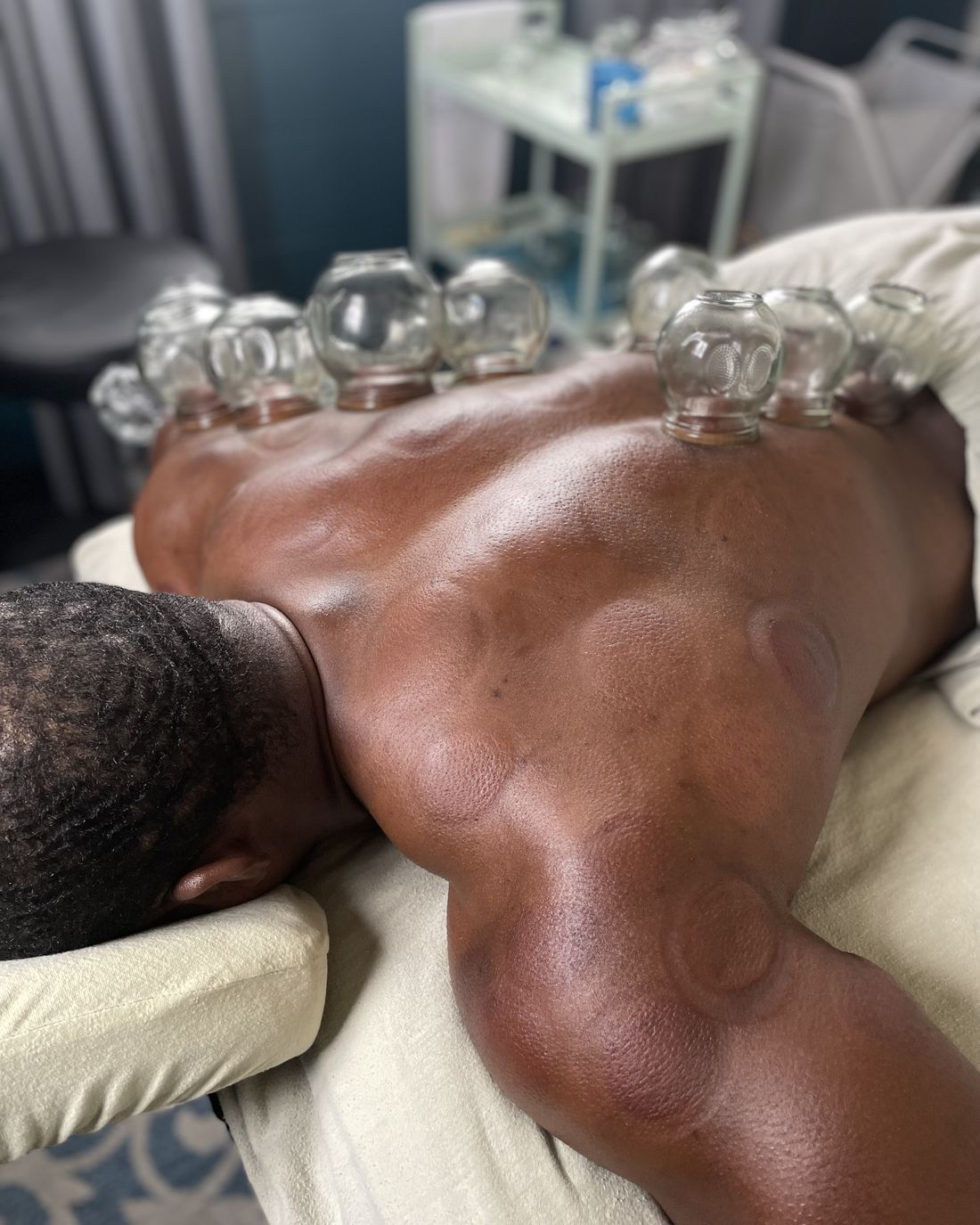
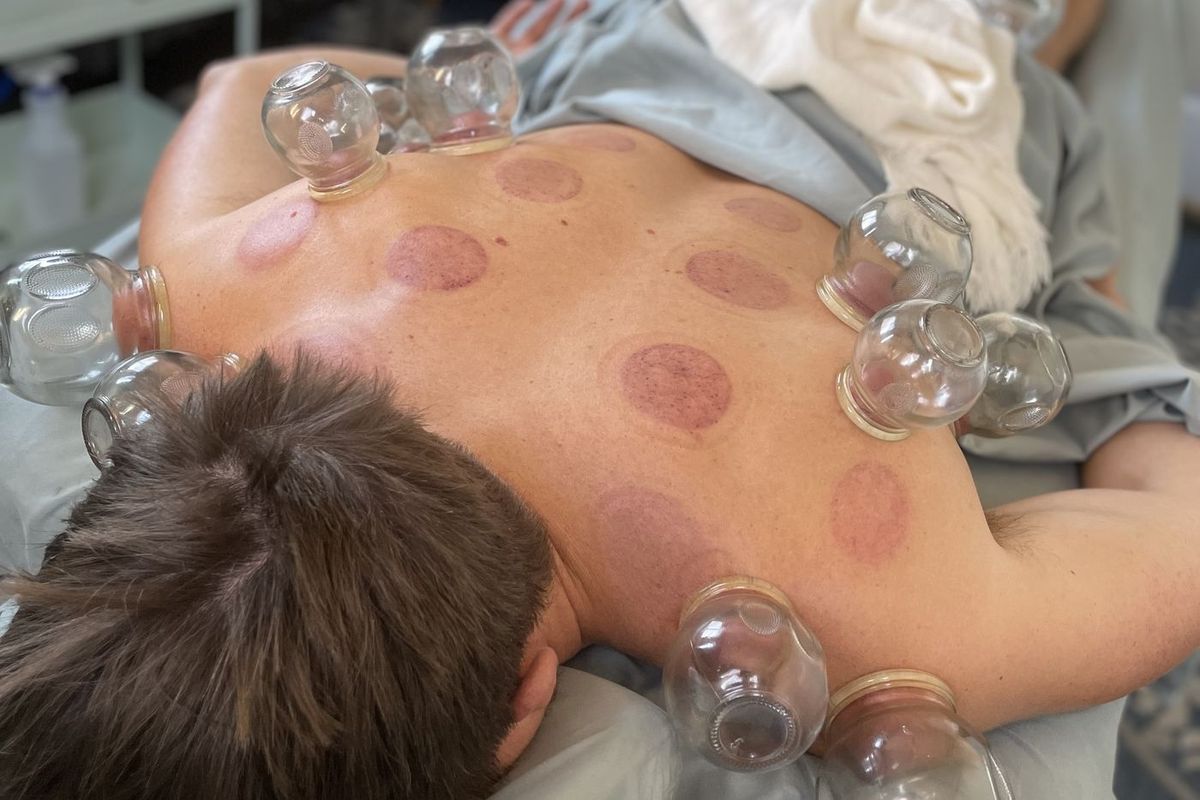
If cupping is part of your sessions, let the marks fade before the same spot gets cupped again. The guide to cupping marks covers how long that takes, and fire cupping is included in every Rocking Calm massage when it’ll help.
How much does regular massage cost?
Frequency is partly a budget question, and that’s fine. A rhythm you can keep beats an ambitious one you drop after two months. At Rocking Calm’s regular prices:
- Once a month: 12 sessions a year, or $1,800 at 60 minutes ($150 each) and $2,280 at 90 minutes ($190 each).
- Every two weeks: 26 sessions a year, or $3,900 at 60 minutes.
- Every week: 52 sessions a year, or $7,800 at 60 minutes.
If money is the limit, consider a steady 60 minutes every four to six weeks instead of an occasional 120 after things fall apart.
If you already know you want a monthly rhythm, Rocking Calm offers memberships: $120 a month for a 60-minute session or $149 a month for 90 minutes, billed monthly and renewing until you cancel. Members get 25% off extra sessions that month, so an extra 90 would be $142.50 instead of $190. One thing to know: if a member cancels with less than 24 hours’ notice, that month’s session is used up.
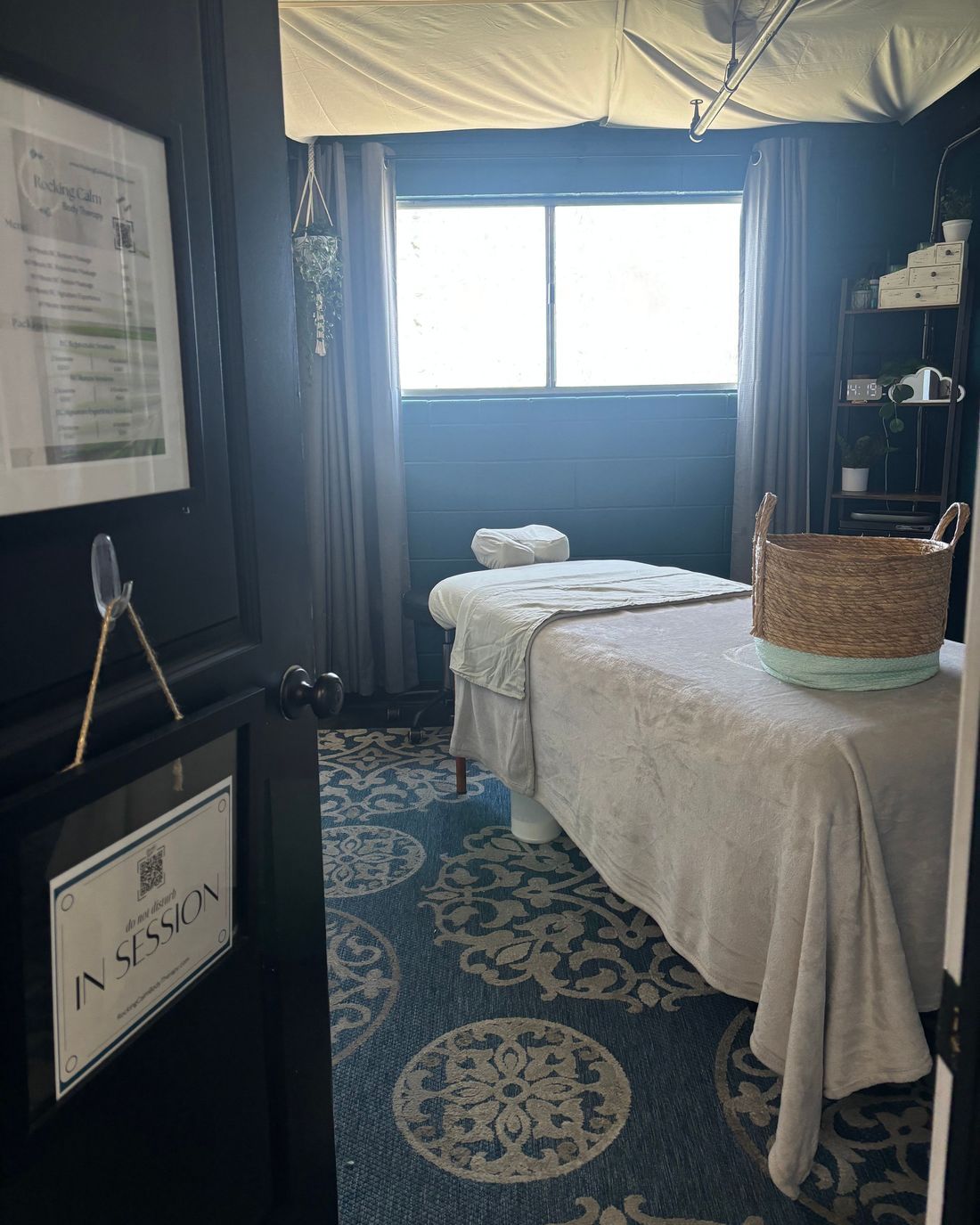
Paying per session works too, and new clients can try 60 minutes for $85 (reg. $150) with code INTRO85. The room is in the Midway District, minutes from Point Loma; here’s how to find it.
Ready to find your rhythm?90 minutes, $190. Cupping, scraping, hot stones and stretching included.
Massage frequency questions
How often can you get a massage?
As often as your body recovers between sessions. Massage is generally safe when done properly by a trained professional,4 so the practical limits are soreness, which usually fades within about a day and a half,5 and your budget. If you come often, keep most sessions on the lighter side.
Is it OK to get a massage every week?
Yes, for most healthy people. Massage studies often use weekly or twice-weekly sessions,1,2 and serious side effects are rare.4 Check with your doctor first if you have a bleeding disorder, take blood thinners or recently had a blood clot.4
How often should you get a deep tissue massage?
Every two to four weeks is a sensible starting rhythm. Deeper work can leave you sore the next day,4 so give each area time to settle, and use lighter sessions in between if you want to come more often.
How often should you get a massage for stress?
Every two to four weeks is a realistic place to start. Research suggests massage may help reduce stress and support relaxation,4 and a steady rhythm keeps that from being a once-a-year event.
How often should you get a massage for neck pain?
For chronic neck pain, more than once a week may help at first. In one trial, 60-minute sessions two or three times a week for four weeks did better than once a week.2 The benefits may not last long without follow-up, and new or unexplained pain should be checked by a doctor first.1
How often should you get a massage if you work out?
Every two to four weeks for regular training, and every one to two weeks during a hard block. Massage may ease post-workout soreness and perceived fatigue,3 but there’s no proven ideal number of sessions.
How long do the benefits of a massage last?
Often not very long, which is why rhythm matters. For neck and shoulder pain, benefits may only last a short time,1 and in one neck pain trial the edge from extra weekly sessions faded at later follow-up.2 Notice how long you feel looser, and book around that.
Sources
- National Center for Complementary and Integrative Health (NIH). Massage Therapy: What You Need To Know. Last updated May 2019.
- Nahin RL, Boineau R, Khalsa PS, Stussman BJ, Weber WJ. Evidence-Based Evaluation of Complementary Health Approaches for Pain Management in the United States. Mayo Clinic Proceedings. 2016;91(9):1292-1306.
- Dupuy O, Douzi W, Theurot D, Bosquet L, Dugué B. An Evidence-Based Approach for Choosing Post-exercise Recovery Techniques to Reduce Markers of Muscle Damage, Soreness, Fatigue, and Inflammation: A Systematic Review With Meta-Analysis. Frontiers in Physiology. 2018;9:403.
- Mayo Clinic. Massage therapy. Updated September 16, 2026.
- Cleveland Clinic. How To Relieve Muscle Soreness After a Massage. February 2, 2024.
- American Massage Therapy Association, Massage Therapy Journal. Cumulative Effects of Regular Massage. Martha Brown Menard, PhD, LMT. August 1, 2019.
This page is general information, not medical advice. Talk with your healthcare provider about whether a treatment is right for you.