Muscle scraping in San DiegoA tool for the
stubborn spots.Muscle scraping (IASTM), included in every massage at no extra charge.
When part of your massage needs a different kind of pressure, Nicole can bring in a scraping tool. Here's what IASTM is, how it feels, what the redness means and what the research actually shows.
New clients: first 60 minutes $85 (reg. $150) with code INTRO85
- IncludedIn every massage
- From $15060, 90 or 120 min
- $85First 60 min for new clients
What is muscle scraping (IASTM)?
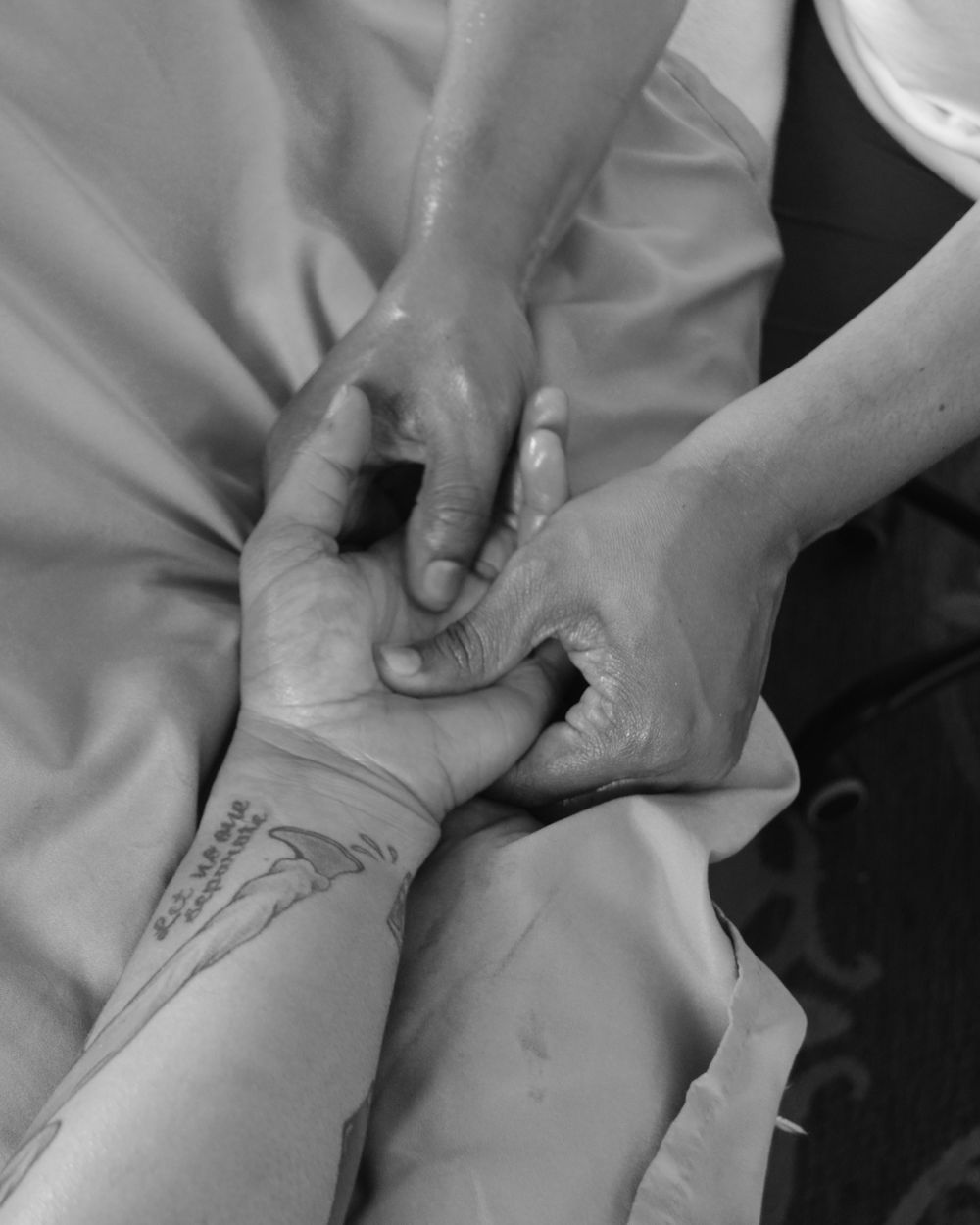
At Rocking Calm, muscle scraping in San Diego isn't a separate appointment. It's a tool Nicole can pick up partway through your massage. The clinical name is instrument-assisted soft tissue mobilization, or IASTM: a specially designed instrument moves over the skin to work the muscle and connective tissue underneath, with the goal of easing pain and helping you move more freely.1
Why use a tool instead of hands? Clinicians who use IASTM say an instrument lets them work deeper and more precisely while sparing their own hands. Some also believe the tool makes texture easier to feel, so both therapist and client notice spots that feel different.1 Those are the reasons practitioners give, not proven effects.
You'll also hear that scraping "breaks up scar tissue." That's what practitioners aim for: remodeling scar tissue, adhesions and fascial restrictions. Lab studies in rats have shown tissue changes after instrument work, but those changes haven't been confirmed in human trials.1
Is muscle scraping the same as gua sha?
They're relatives. Gua sha comes from traditional Chinese medicine and goes back thousands of years: a practitioner uses a small, smooth-edged tool to stroke or scrape the skin.2 Traditional tools include water buffalo horn, jade and even a soup spoon.1 Depending on who you ask, it's also called coining, spooning or muscle scraping.2
Some clinicians count gua sha as a form of IASTM, but its reasoning, goals and application differ from the modern clinical versions.1 Traditional gua sha scrapes until a red blemish appears and is tied to ideas like the flow of qi, while IASTM is aimed at tissue mobility, pain and range of motion.1,2
Where Graston fits in
Graston Technique is a trademarked brand of IASTM, one of several companies with their own instruments and approach to treatment.1 So all Graston is IASTM, but not all IASTM is Graston. At Rocking Calm, muscle scraping is simply one of the tools that can come with your massage.
Does muscle scraping hurt?
It shouldn't hurt in a sharp way. Expect firm pressure, and some discomfort over tight spots: a systematic review lists discomfort during treatment among IASTM's side effects.1 A Cleveland Clinic acupuncturist describes starting gently on tense tissue and gradually building up the intensity.2
Speak up the second it stings, burns or turns sharp. Cleveland Clinic's advice is to tell your practitioner as soon as it hurts, because pain makes you tighten up instead of loosen.2 Nicole can lighten up, change the angle, or put the tool down and go back to her hands.
Why does muscle scraping leave red marks?
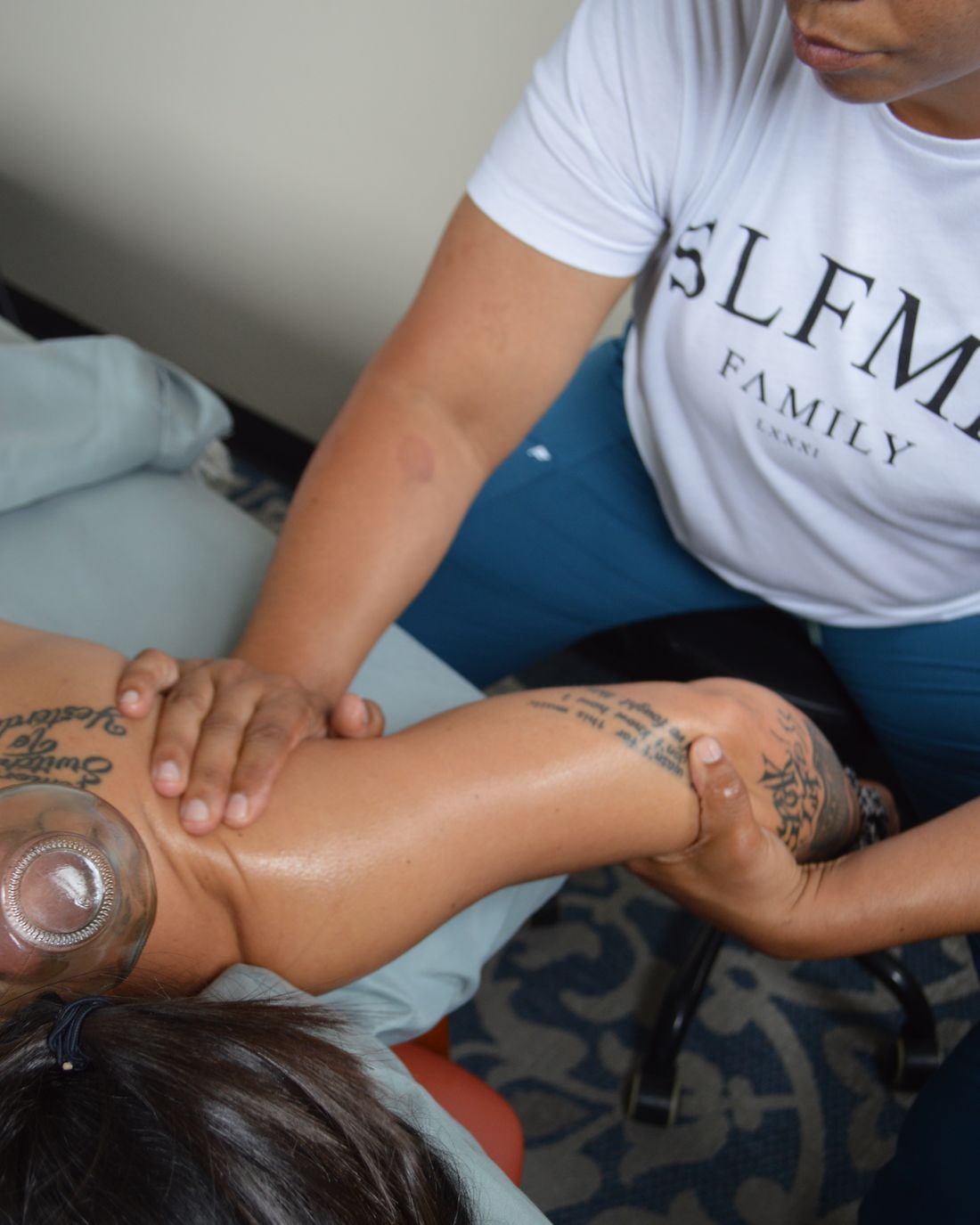
Gua sha has been shown to increase blood flow through the smallest vessels where it's done,2 so some redness after scraping is expected. Scraping can also bring up petechiae: small reddish-purple dots that are tiny spots of bleeding under the skin from broken capillaries.2 The same IASTM review lists this kind of bruising among its side effects.1
More force isn't better. Scraping too aggressively can cause muscle soreness, bruising or skin discoloration,2 and Mayo Clinic notes that some soreness the next day can happen, depending on the type of massage.6 Two practical notes:
- Big event coming up? Tell Nicole about a wedding, photo shoot or beach day so she can keep the work light or skip areas that will show.
- Getting cupping too? Fire cupping marks are a different story. Our guide to cupping marks covers the colors and how long they last.
Got a spot that won't let go?Muscle scraping is included in every 60, 90 and 120-minute massage. New clients: first 60 minutes $85.
What are the benefits of muscle scraping?
What it's used for
Clinicians use IASTM on tight, restricted tissue to try to reduce pain and improve range of motion and function.1 Inside a massage, it gives Nicole a different kind of pressure for stubborn spots.
What the research says
Honestly, it's mixed:
- Range of motion. A 2024 meta-analysis of nine trials (450 people) found IASTM improved range of motion by about 2 to 5 degrees on average, with very low to low certainty.3 An earlier review found short-term gains, measured up to 24 hours later, in the two range-of-motion trials it covered.1
- Pain. A 2025 meta-analysis of 11 small trials found moderate-certainty evidence that adding IASTM to other treatment reduced pain in people with musculoskeletal problems, and low-certainty evidence for better function.4
- The skeptical view. A 2023 review of 46 trials rated the evidence very low quality and found no clinically meaningful gains in pain, function or range of motion compared with other treatments.5
Our take
Scraping isn't a cure, and one session won't undo a long-standing problem. It's one tool among several, alongside hands, fire cupping, hot stones and assisted stretching, and Nicole leaves it out when your body responds better to something else.
Who should skip muscle scraping?
Cleveland Clinic calls gua sha generally safe, with some exceptions. It says the technique may not be a fit if you:2
- have circulation problems
- have diabetes
- have eczema, psoriasis or another skin condition
- take blood thinners, such as aspirin, Coumadin or apixaban
- are going through chemotherapy
- are pregnant
Scraping should never happen over irritated or inflamed skin, like a rash, a wound or sunburn.2 And for massage in general, Mayo Clinic suggests checking with your healthcare team first if you've recently had a heart attack or a blood clot in your leg, or if you have a bleeding disorder, burns, broken bones or severe osteoporosis.6
Can you do muscle scraping on yourself?
On your face, gently, maybe. On your body, it's better left to a trained provider. That's Cleveland Clinic's advice if you don't have a background in it, though light gua sha on your own face is typically OK.2 Go too hard on yourself and you risk the same soreness, bruising and discoloration a heavy-handed practitioner can cause.2 If you do own a tool, keep it clean, and stop using it once it chips or breaks.2
Where can I get muscle scraping in San Diego?
Right here, inside a massage. Rocking Calm doesn't sell scraping as its own session. It's one of the tools included in every customized 60, 90 and 120-minute massage at no extra charge, along with fire cupping, hot stones and assisted stretching. A typical flow:
- Check-in. Where you're tight, what you've been doing (lifting, running, long days at a desk) and anything on the list above.
- Hands first. Nicole warms the area up with massage before any tool comes out.
- The tool. With a little oil on the skin, she glides a smooth-edged tool along the muscle for a few minutes per area.
- Common spots. Forearms, calves, outer thighs, upper back and shoulders.
- Back to hands. The session carries on with whatever your body needs next, from deep tissue work to a few stretches.
For one or two problem areas, 60 minutes usually covers it. For full-body work plus scraping on several spots, book 90. If you train hard, see how scraping fits into a sports massage, and find session prices and memberships on the pricing page.
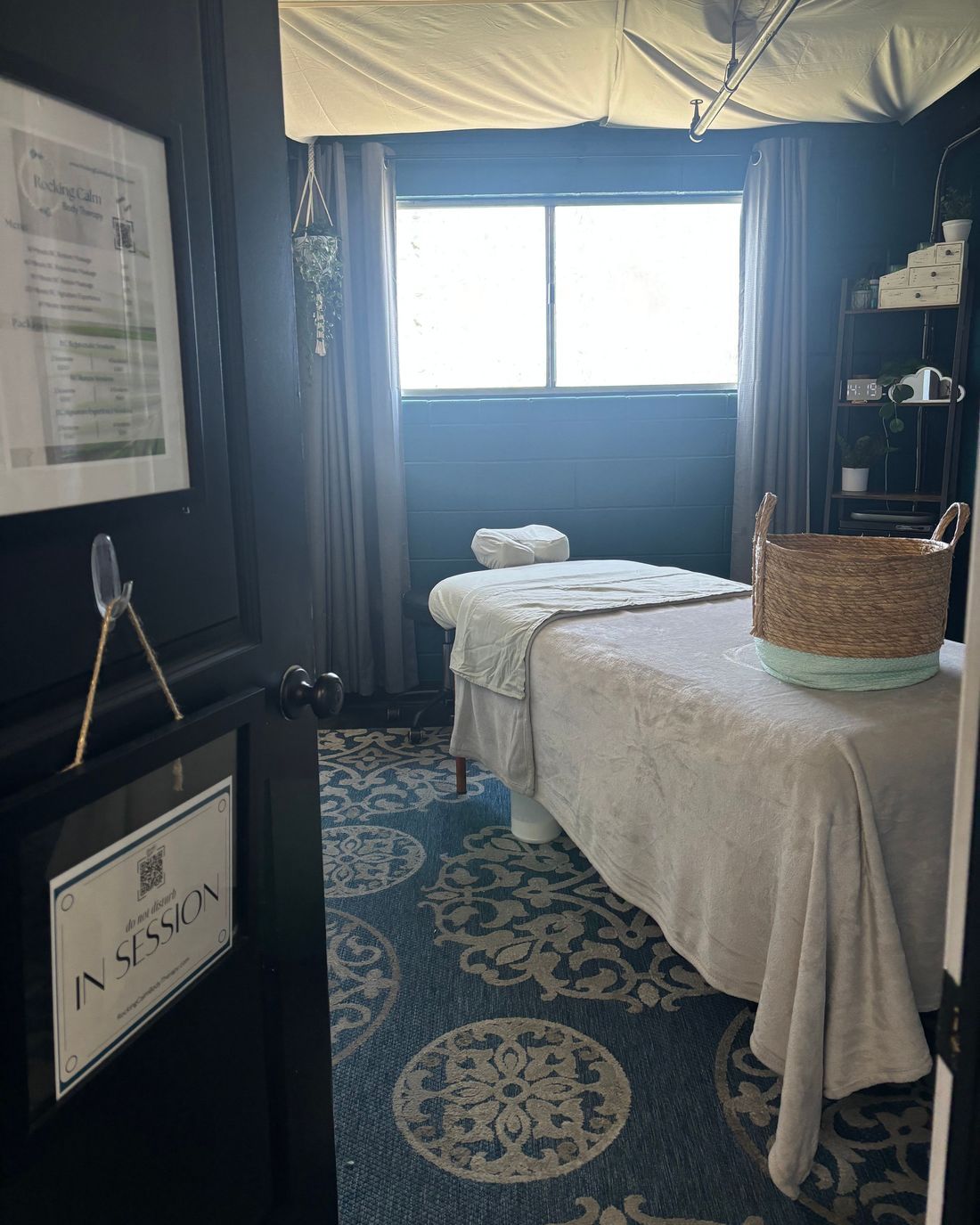
Looking for muscle scraping near Point Loma, Ocean Beach, Liberty Station or Old Town? Rocking Calm is minutes away at 4030B Sports Arena Blvd, in the Midway District. Hours and directions are on the visit page.
Muscle scraping, no upchargeBook a customized massage and Nicole brings in the tool where it helps. New clients: first 60 minutes $85.
Muscle scraping questions
What is muscle scraping good for?
Mostly tight, restricted muscle. Clinicians use it to try to ease pain and improve range of motion and function.1 Studies suggest small, short-term gains, but the evidence is mixed and mostly low quality.3,5
Is IASTM the same as gua sha?
Not exactly. Both use a tool to scrape the skin, and some clinicians count gua sha as a form of IASTM, but gua sha comes from traditional Chinese medicine and its reasoning and goals differ.1,2
Is Graston the same as muscle scraping?
Not quite: Graston is one branded version of it. Graston Technique is a trademarked form of IASTM with its own instruments and approach, one of several on the market.1 "Muscle scraping" is the everyday name for the whole category.
Does muscle scraping hurt?
It shouldn't feel sharp. Firm pressure and some discomfort over tight spots are part of it,1 and you may be a little sore the next day.6 Tell your therapist the moment it hurts so they can ease off.2
Why does muscle scraping leave red dots?
Those dots are petechiae, tiny spots of bleeding under the skin from broken capillaries.2 They're a known side effect of scraping,1 and scraping too hard makes bruising and discoloration more likely.2
Who should not get muscle scraping?
Anyone on blood thinners, or with circulation problems, diabetes or a skin condition like eczema or psoriasis, should skip it or check with a doctor first, as should people who are pregnant or going through chemotherapy.2 It also shouldn't be done over rashes, wounds or sunburn.2
How much does muscle scraping cost in San Diego?
At Rocking Calm, it costs nothing extra. Muscle scraping comes with every 60, 90 and 120-minute massage ($150 to $240), and first-time clients pay $85 for 60 minutes with code INTRO85.
Sources
- Journal of the Canadian Chiropractic Association (Cheatham SW, et al.), via PubMed Central. The efficacy of instrument assisted soft tissue mobilization: a systematic review. Published September 2016.
- Cleveland Clinic. Gua Sha: What It Is and How To Do It. September 18, 2025.
- BMC Musculoskeletal Disorders (Tang S, et al.), via PubMed Central. The effectiveness of instrument-assisted soft tissue mobilization on range of motion: a meta-analysis. Published April 2024.
- BMC Musculoskeletal Disorders (Tang S, et al.), via PubMed Central. The effectiveness of instrument-assisted soft tissue mobilization on pain and function in patients with musculoskeletal disorders: a systematic review and meta-analysis. Published March 2025.
- Disability and Rehabilitation (Nazari G, et al.), via PubMed. Effectiveness of instrument-assisted soft tissue mobilization for the management of upper body, lower body, and spinal conditions. An updated systematic review with meta-analyses. Published 2023 (online May 2022).
- Mayo Clinic. Massage therapy. Updated September 16, 2026.
This page is general information, not medical advice. Talk with your healthcare provider about whether a treatment is right for you.