Fire cupping in San DiegoFire & glass.Cupping that lifts what pressure can’t.
Glass cups, a quick flame and a few minutes of suction. At Rocking Calm, fire cupping is part of every 60, 90 and 120-minute massage, and you can book it on its own too.
New clients: first 60 minutes $85, cupping included. Just want the cups? Book 45 minutes of cupping, $95
- $0 extraIn every massage
- $95Cupping only, 45 min
- $85First 60 min, new clients
What is fire cupping?
Fire cupping is the traditional way of doing cupping therapy, and it’s one of the tools Nicole uses most at Rocking Calm. If you’re looking into fire cupping in San Diego, this page covers what actually happens, how it feels, what the marks mean and who should skip it.
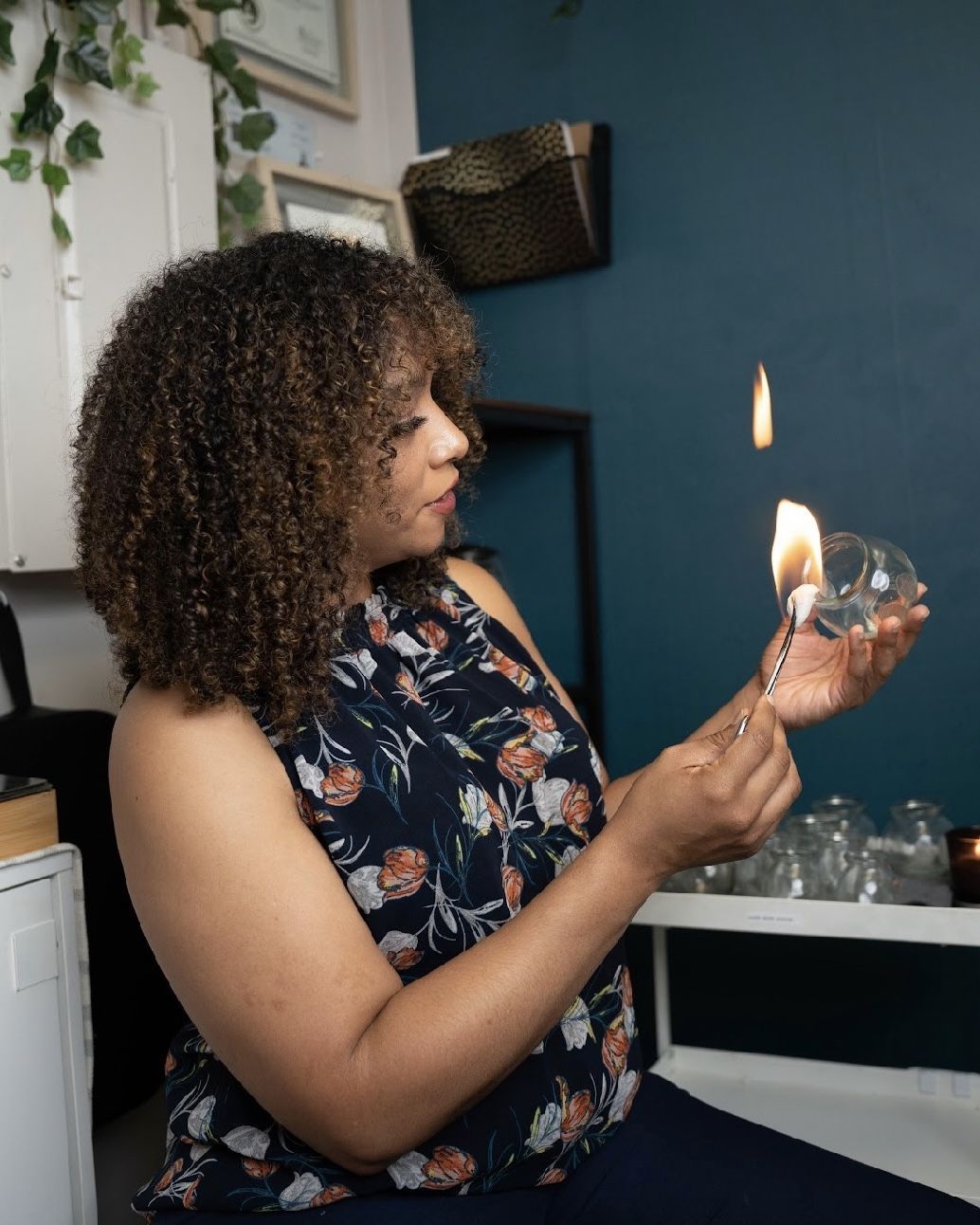
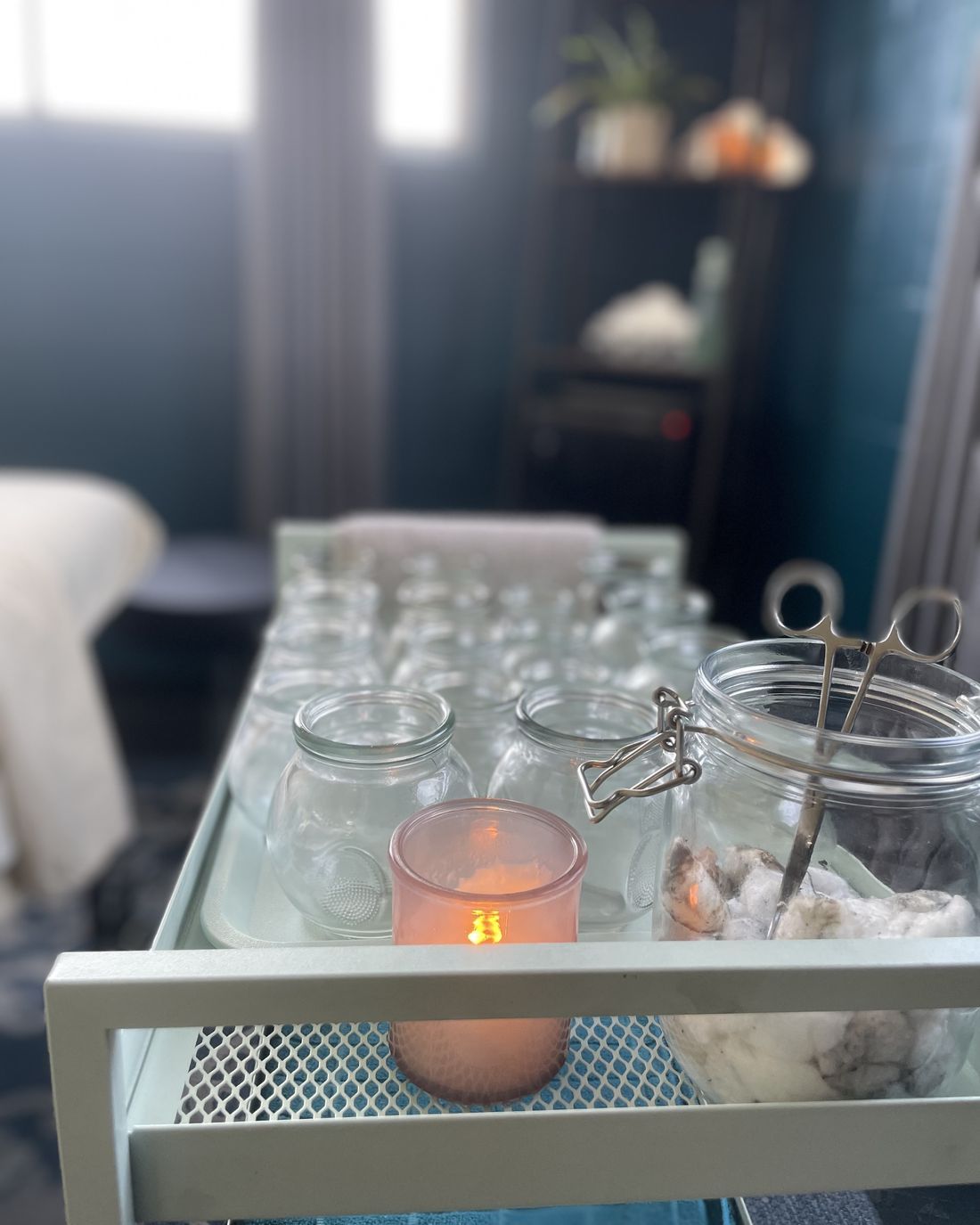
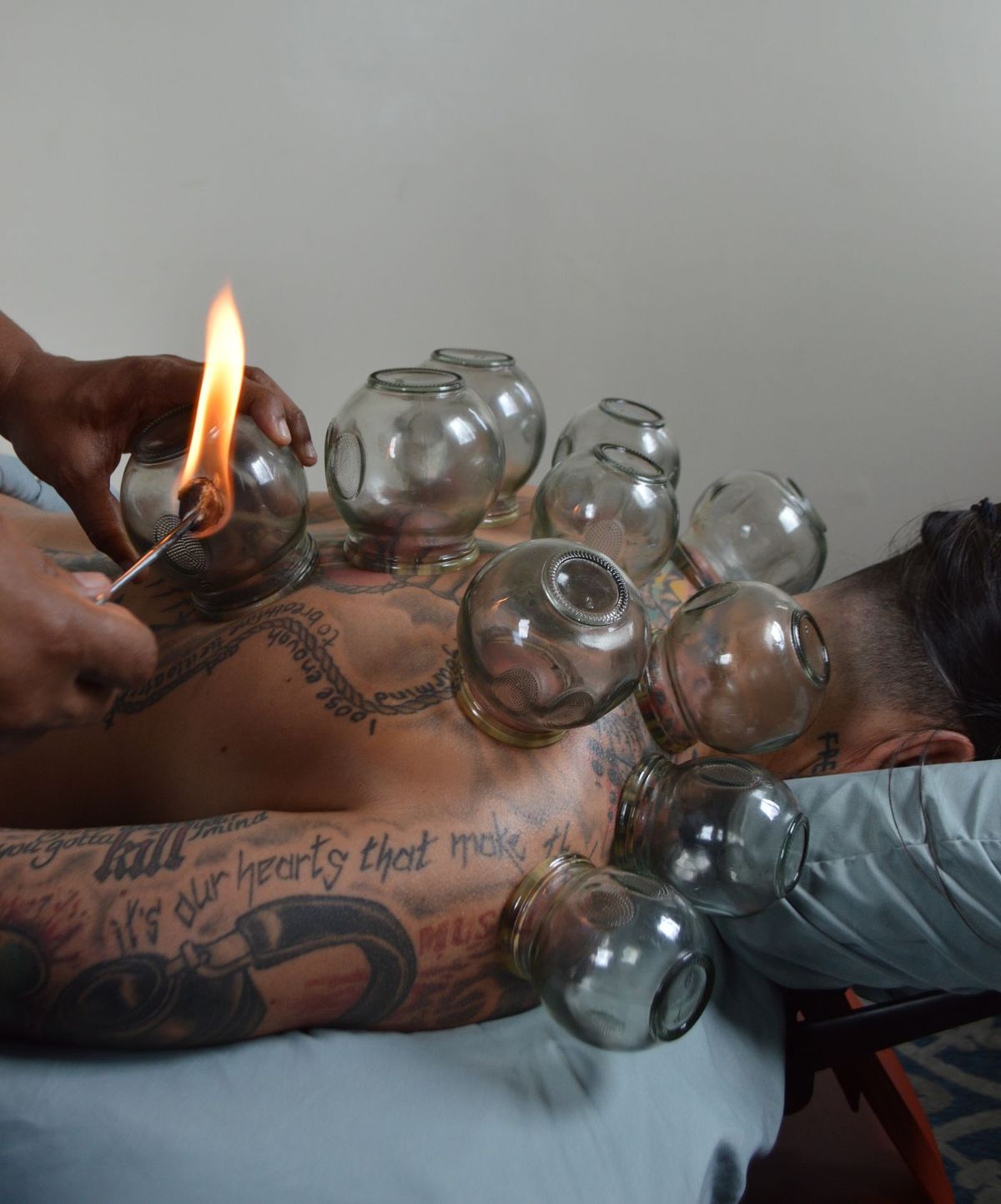
Cupping comes from traditional medicine in several parts of the world, including China and the Middle East.2 The fire version works like this: a cotton ball soaked in alcohol is lit, the flame heats the inside of a glass cup for a moment, and the cup goes onto your skin. That creates a vacuum that pulls your skin up into the glass.1 The flame is out of the cup before it ever reaches you.
Cups usually stay in place for several minutes, and most providers use three to five at a time. With a little oil on the skin, they can also glide gently across a muscle, which is called running cupping.1
How does cupping work?
Massage presses down. Cupping pulls up. The suction lifts your skin and the tissue under it and draws blood toward the surface. It also breaks open tiny blood vessels called capillaries just under the skin, which is where the round marks come from.1
Researchers are still working out why people find it helpful, and most of the research so far is low quality.2 Cleveland Clinic describes cupping as a complementary treatment, used alongside regular medical care rather than on its own.1 That’s how Rocking Calm uses it too: one tool inside a massage, for the spots that respond better to lifting than to more pressure.
What fire cupping looks like at Rocking Calm
Cupping here usually happens inside a massage, not instead of one. A typical flow:
- A quick check-in. Where you’re tight, what you’ve been training, and anything that would make cupping a bad idea (more on that below).
- Warm-up massage, so the tissue is ready before the cups go on.
- The cups. Nicole warms each glass cup and sets it in place, most often on the back, shoulders, hips or hamstrings.
- Rest or glide. The cups sit for a few minutes or move slowly along the muscle.
- Back to hands. The session continues with massage, muscle scraping, hot stones or assisted stretching, whatever your body needs.
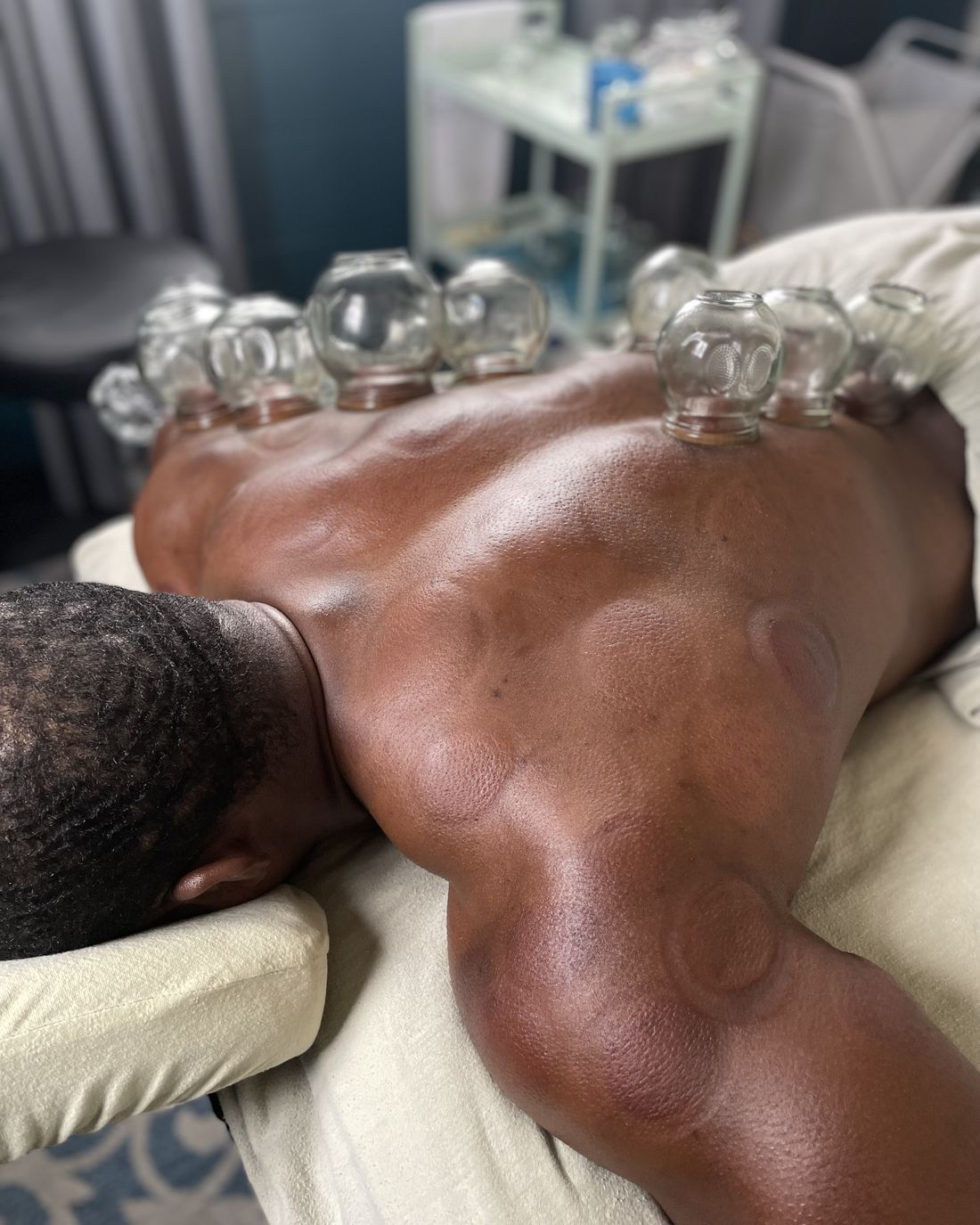
Included, never upsoldNew clients: first 60 minutes $85.
Book 60, 90 or 120 minutes and fire cupping is part of the session whenever it’ll help.
Does fire cupping hurt?
It shouldn’t. You’ll likely feel your skin tighten under the cup, and afterward you may feel a little bruised or sore, but not severely uncomfortable.1
If anything burns, pinches or feels sharp, say so. The suction can be eased off and a cup comes off in a second. For the longer answer, including what first-timers usually notice, read Does cupping hurt?
How long do cupping marks last?
Usually a week or two. The marks look like bruises, but they come from broken capillaries near the surface, not injured muscle fibers.1 How dark they get varies from person to person and from session to session.
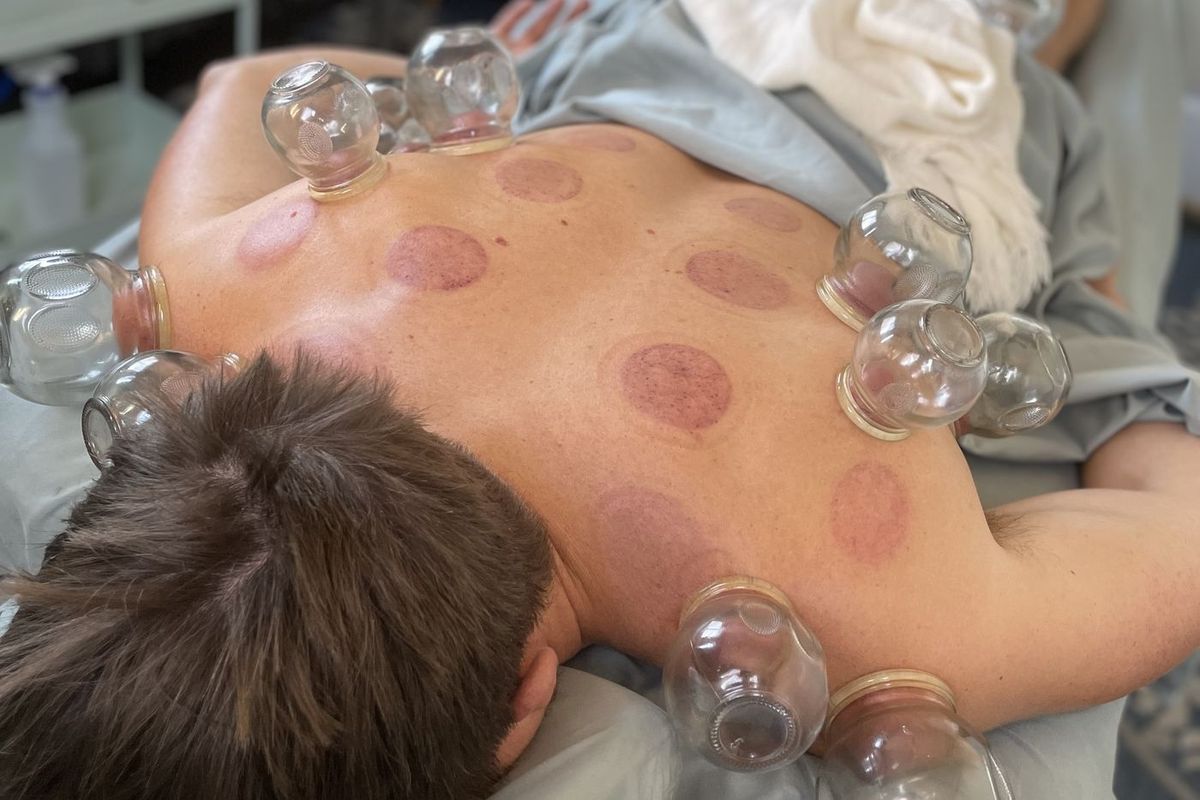
- Wedding, photo shoot or beach day coming up? Tell Nicole. She can skip cupping or keep the cups where your clothes will cover the marks.
- Seeing a doctor or physical therapist while the marks show? Mention the cupping. The NIH recommends explaining the marks to your providers so they aren’t mistaken for signs of abuse.2
What the colors mean and how to look after your skin afterward: our guide to cupping marks.
What are the benefits of cupping?
What people report
People mostly use cupping for pain. Commonly reported benefits include less pain and muscle tightness, better blood flow and more range of motion.1
What the research says
The NIH’s center for integrative health puts it plainly: cupping may help reduce pain, but the evidence isn’t very strong, and there isn’t enough high-quality research to say whether it helps other conditions.2 A review of trials in athletes found reports of less pain and more range of motion, but most of those trials had a high or unclear risk of bias, and the authors couldn’t recommend for or against cupping for athletes.3
Our honest take
Cupping is a tool, not a cure-all, and Rocking Calm won’t sell it as one. Nicole reaches for it when a back, shoulder or hip needs lifting rather than more pressure, often alongside sports massage or deep tissue work. The study-by-study rundown is in our guide to cupping benefits.
Who should skip cupping?
Cupping isn’t for everyone. Cleveland Clinic advises against it if you:1
- are pregnant
- have anemia
- have a pacemaker
- have a bleeding disorder such as hemophilia
- have blood clotting problems, such as deep vein thrombosis, or a history of stroke
- have cardiovascular disease
- have a skin condition such as eczema or psoriasis
- have seizures (epilepsy)
Possible side effects include bruising, soreness, burns from heated cups, skin infection, scarring and skin discoloration that lingers.1,2 Call your doctor if you notice a burn, extreme pain or soreness, a fever, or signs of a skin infection such as redness, tenderness or discharge.1
Fire cupping vs. other types of cupping
Fire is the traditional way to make the suction. Many providers now use a suction device instead.1 Here’s how the common types compare.
| Type | How it works | Good to know |
|---|---|---|
| Fire cupping | A flame briefly heats the inside of a glass cup, creating suction on the skin1 | The traditional method, and the one Rocking Calm uses. Marks are common. |
| Pump cupping | A suction device pulls the air out of the cup instead of heat1 | No flame. Suction is easy to dial up or down. |
| Running cupping | Oil goes on the skin, then the cups glide gently across the area1 | Feels like a deep, pulling massage. |
| Wet (bleeding) cupping | The skin is lightly punctured with a needle before the cups go on1 | Draws blood. Not offered at Rocking Calm. |
Cupping on its own, or inside a massage?
Both work. The 45-minute RC Cupping Therapy session ($95) is fire cupping only, for when you know exactly what you want. Every 60, 90 and 120-minute massage includes cupping whenever it’ll help, at no extra charge.
On a first visit, the math is easy: your first 60-minute massage is $85 with code INTRO85, which is less than the cupping-only session, and you get massage and cupping. If you want cupping every month, a membership starts at $120 a month and renews monthly until you cancel.
How much does cupping cost in San Diego?
Prices vary around town. At Rocking Calm, cupping is never an add-on:
- Fire cupping on its own: 45 minutes, $95
- Included in every massage: 60 minutes $150, 90 minutes $190, 120 minutes $240
- New clients: your first 60-minute massage is $85 with code INTRO85, or take 20% off a first 90 or 120 with code FIRST20
- Members: from $120 a month, billed monthly until you cancel
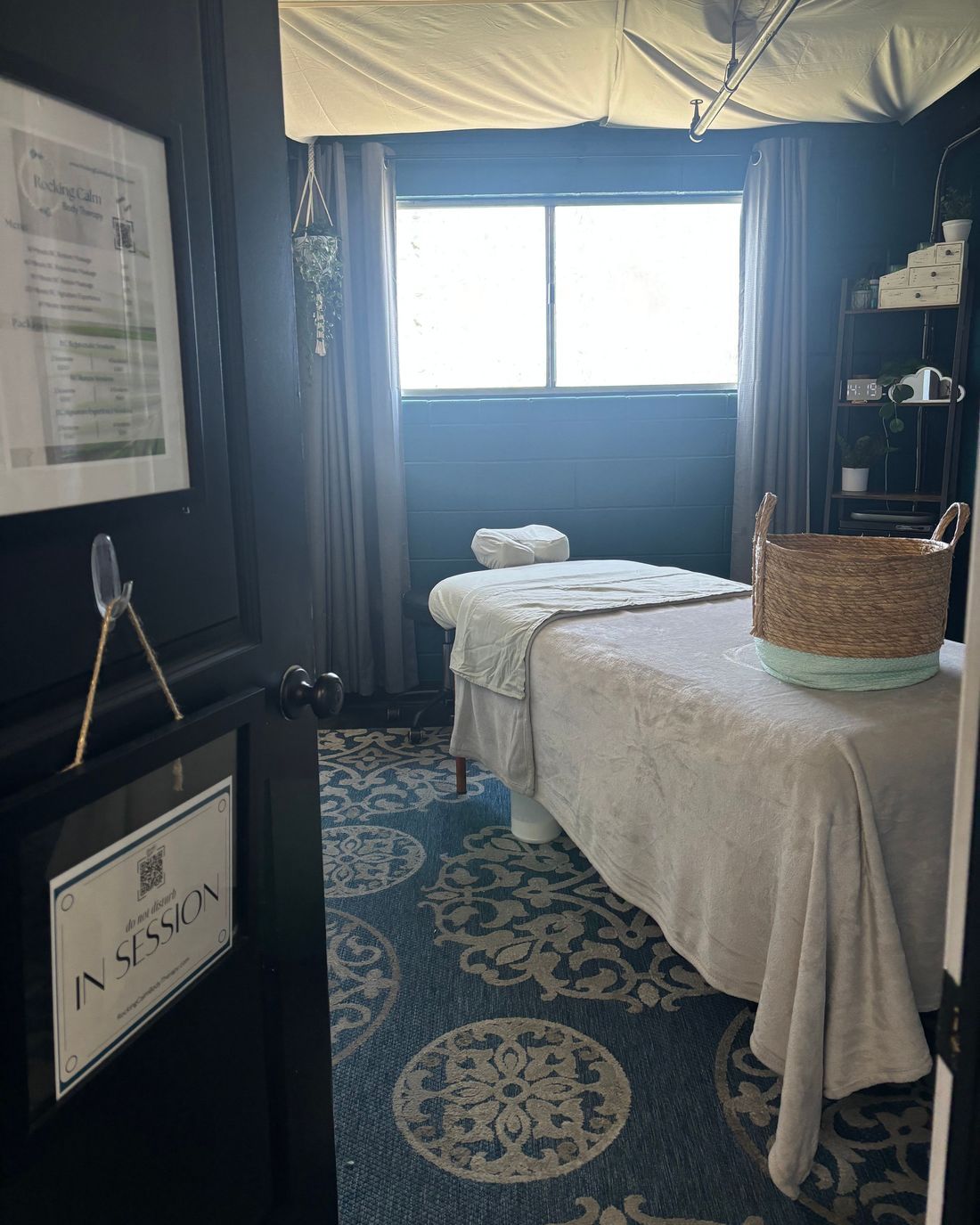
Rocking Calm is a private room on the top floor of Legacy Performance Institute at 4030B Sports Arena Blvd, in the Midway District. It’s minutes from Point Loma, Ocean Beach, Liberty Station and Old Town, and you’ll find directions and parking notes here.
Try fire cupping45 minutes, $95. Or get it inside any massage.
Fire cupping questions
What does fire cupping do to the body?
It lifts skin and muscle upward and draws blood toward the surface. The suction also breaks tiny capillaries under the skin, which causes the round marks.1 Many people say it eases muscle tightness and pain, though the research is still limited.2
What’s the difference between cupping and fire cupping?
Fire cupping is one way to create the suction: a flame briefly heats the inside of the cup. Other methods use a suction device instead.1 Both lift the skin the same basic way.
Does fire cupping hurt?
It shouldn’t. Expect a firm, tight pulling feeling and maybe mild soreness afterward.1 Tell Nicole if anything burns or feels sharp, and she’ll ease off.
How long do cupping marks last?
Usually a week or two. They look like bruises but come from broken capillaries near the surface, not injured muscle.1
Is cupping included in a massage at Rocking Calm?
Yes. Fire cupping is part of every 60, 90 and 120-minute massage whenever it’ll help, at no extra charge. You can also book a 45-minute cupping-only session for $95.
How much does cupping cost in San Diego?
At Rocking Calm, a 45-minute fire cupping session is $95, and cupping is included in every massage ($150 to $240). New clients pay $85 for their first 60 minutes with code INTRO85.
How often can you get cupping?
There’s no research-backed schedule. A sensible rule is to let the marks fade completely before cupping the same area again, and many regulars simply get it as part of a monthly massage.
Sources
- Cleveland Clinic. Cupping Therapy. Medically reviewed June 7, 2023.
- National Center for Complementary and Integrative Health (NIH). Cupping. Updated November 2018.
- Bridgett R, Klose P, Duffield R, Mydock S, Lauche R. Effects of Cupping Therapy in Amateur and Professional Athletes: Systematic Review of Randomized Controlled Trials. Journal of Alternative and Complementary Medicine, 2018.
This page is general information, not medical advice. Talk with your healthcare provider about whether a treatment is right for you.